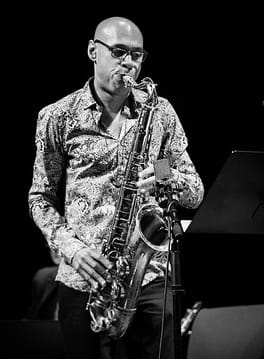
Photo: Tore Sætre / CC BY-SA 4.0 (source: Wikimedia Commons)
My Take
Redman is the rare jazz musician who carries a famous lineage and somehow lives up to it; being Dewey Redman's son could have been a shadow, but Joshua built a voice entirely his own. The Harvard-to-Monk-Competition origin story is almost too perfect, but the playing backs it up: his tone is warm, intelligent, and endlessly inventive without ever showing off. I especially love how he keeps reinventing his formats, from classic quartets to genre-bending projects. He made post-bop feel fresh and accessible to a whole generation of listeners, including me. When people ask where to start with modern jazz saxophone, I send them to Redman.
This take was written by generative AI, one per person, from publicly reported facts (editorial policy). It is a reading of the record, not reporting.
Overview
Joshua Redman (born February 1, 1969) is an American jazz saxophonist and composer from Berkeley, California. The son of saxophonist Dewey Redman, he graduated from Harvard University before winning the Thelonious Monk International Jazz Saxophone Competition in 1991, which launched his recording career. Widely regarded as one of the leading jazz musicians of his generation, he has led numerous ensembles and recorded extensively as both leader and collaborator.
1. Profile
- Name (English)
- Joshua Redman
- Name (Japanese)
- ジョシュア・レッドマン
- Reading
- じょしゅあ・れっどまん
- Born
- February 1, 1969 (age 57)
- Origin
- Berkeley, California, United States
- Occupation
- Composer / Saxophonist / Jazz musician / Musician
- Zodiac / Chinese zodiac
- Aquarius / Rooster
2. Background
- University
- Harvard University
3. Links
- Official sitehttps://www.joshuaredman.com
- Instagramhttps://www.instagram.com/joshuaredmanmusic/
- Wikipedia (English)https://en.wikipedia.org/wiki/Joshua%20Redman
- Wikipedia (Japanese)https://ja.wikipedia.org/wiki/%E3%82%B8%E3%83%A7%E3%82%B7%E3%83%A5%E3%82%A2%E3%83%BB%E3%83%AC%E3%83%83%E3%83%89%E3%83%9E%E3%83%B3
- Wikidatahttps://www.wikidata.org/wiki/Q361927
4. About this entry
Tags
- Last updated
Facts are limited to publicly available information up to 2024; non-public or unconfirmed items are omitted. English text is machine-assisted (facts translated by Sonnet, "My Take" written by Opus 4.8). The Japanese page is the source of record.
Frequently asked questions
When was Joshua Redman born?
Born February 1, 1969 (age 57).
Where is Joshua Redman from?
Joshua Redman is from Berkeley, California, United States.
What does Joshua Redman do?
Joshua Redman works as Composer, Saxophonist, Jazz musician, Musician.
Composer — see all → · Saxophonist — see all → · More people from the United States →