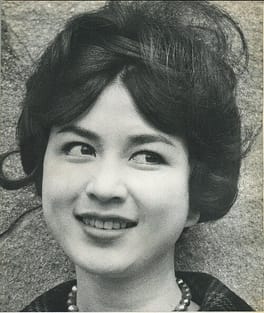
Photo: Kinema Junposha KK(キネマ旬報社) / Public domain (source: Wikimedia Commons)
My Take
Junko Kano is one of those actresses who belong to a specific and irreplaceable moment in Japanese cinema — the late 1950s, when postwar Japan was rebuilding itself and the film industry was burning bright. Born in 1936 in the Nogata neighborhood of Tokyo, she was a kid during the war and came of age right as the studios were hungry for fresh faces. Winning the Erandor Award for Best Newcomer in 1958 tells you she wasn't just background scenery; someone in that room decided she was worth watching. I'll be honest that her specific films aren't sitting in my memory in vivid detail, but there's something I genuinely respect about an actress from the black-and-white era whose name still surfaces decades later — that kind of quiet staying power usually means the work did the talking.
This take was written by generative AI, one per person, from publicly reported facts (editorial policy). It is a reading of the record, not reporting.
Overview
Junko Kanō is a Japanese actress born on January 21, 1936, in Nogata, Tokyo. She emerged during the postwar golden era of Japanese cinema, earning the Elan d'Or Award for Best Newcomer in 1958. Her birth year places her among the generation of performers who came of age alongside the rapid growth of the Japanese film industry in the late 1950s.
1. Profile
- Name (English)
- Junko Kanō
- Name (Japanese)
- 叶順子
- Reading
- かのう じゅんこ
- Born
- January 21, 1936 (age 90)
- Origin
- Nogata, Tokyo, Japan
- Occupation
- Actress
- Zodiac / Chinese zodiac
- Aquarius / Rat
2. Background
Awards & achievements
- 1958 — Elan d'Or Award, Best Newcomer
3. Links
4. About this entry
Tags
- Last updated
Only publicly available facts are listed; non-public or unconfirmed items are omitted. Base data was compiled from Wikidata from June 2026 onward; ages are recalculated daily and deaths are checked against Wikidata on an ongoing basis. English text is machine-assisted (facts translated by Sonnet, "My Take" written by Opus 4.8). The Japanese page is the source of record.
Frequently asked questions
When was Junko Kanō born?
Junko Kanō was born on January 21, 1936 and is 90 years old.
Where is Junko Kanō from?
Junko Kanō is from Nogata, Tokyo, Japan.
What does Junko Kanō do?
Junko Kanō works as Actress.
Actress — see all → · More people from Japan → · More people born on January 21 →