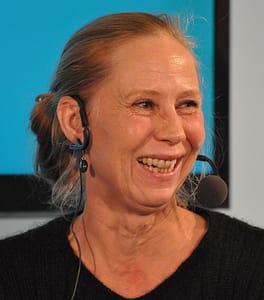
Photo: Soppakanuuna / CC BY-SA 4.0 (source: Wikimedia Commons)
Kati Outinen is a screenwriter, director and stage actor, born on August 17, 1961 in Helsinki, Uusimaa, Finland. That puts Kati Outinen at 65 years old in 2026. Recorded honors include Cannes Film Festival Award for Best Actress (2002), Pro Finlandia Medal of the Order of the Lion of Finland (2005) and Jussi Award for Best Leading Actress (1991, 1997, 2003).
My Take
Kati Outinen is, to me, the human face of Aki Kaurismäki's cinema. Her minimalist style, all stillness and weathered dignity, is exactly why those deadpan Finnish films land so emotionally. Winning Best Actress at Cannes in 2002 for The Man Without a Past confirmed what her admirers already knew: she can convey an entire inner life with almost no movement at all. I am drawn to performers who trust silence, and she does it better than almost anyone. The stack of Jussi Awards and the Pro Finlandia Medal show a country that recognized one of its quiet treasures. Resilient, working-class characters never had a better advocate.
This take was written by generative AI, one per person, from publicly reported facts (editorial policy). It is a reading of the record, not reporting.
1. Profile
- Name (English)
- Kati Outinen
- Name (Japanese)
- カティ・オウティネン
- Reading
- かてぃ・おうてぃねん
- Born
- August 17, 1961 (age 65)
- Origin
- Helsinki, Uusimaa, Finland
- Occupation
- actor / screenwriter / director / stage actor / film actor
- Zodiac / Chinese zodiac
- Leo / Ox
2. Background
Awards & achievements
- 2002 Cannes Film Festival Award for Best Actress
- 2005 Pro Finlandia Medal of the Order of the Lion of Finland
- 1991 Jussi Award for Best Leading Actress
- 1997 Jussi Award for Best Leading Actress
- 2003 Jussi Award for Best Leading Actress
3. Links
4. About this entry
Tags
- Last updated
Facts are limited to publicly available information up to 2024; non-public or unconfirmed items are omitted. English text is machine-assisted (facts translated by Sonnet, "My Take" written by Opus 4.8). The Japanese page is the source of record.
Frequently asked questions
When was Kati Outinen born?
Born August 17, 1961 (age 65).
Where is Kati Outinen from?
Kati Outinen is from Helsinki, Uusimaa, Finland.
What does Kati Outinen do?
Kati Outinen works as actor, screenwriter, director, stage actor, film actor.
Actor — see all → · Screenwriter — see all → · More people from Finland →