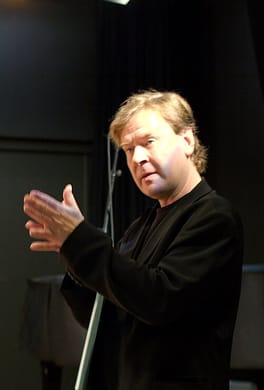
Photo: Sigurd Gartmann from Trondheim, Norway / CC BY-SA 2.0 (source: Wikimedia Commons)
Born on June 27, 1958 in Helsinki, Uusimaa, Finland, Magnus Lindberg is a composer, pianist and musician. As of 2026, Magnus Lindberg is 68 years old. Awards on record include Pro Finlandia Medal of the Order of the Lion of Finland (2012), Wihuri Sibelius Prize (2003) and Nordic Council Music Prize (1988). Credited works include Parada.
My Take
Lindberg is one of those composers who reminds me how alive contemporary classical music still is. Born in Helsinki in 1958, this Finnish composer-pianist has won the Wihuri Sibelius Prize and the Nordic Council Music Prize, and served as composer-in-residence for both the New York and London Philharmonics, meaning the world's great orchestras genuinely wait for his next score. I'm endlessly intrigued that such dense, muscular, often thrilling sound emerges from Finland's spare and severe landscape. If you think modern music is forbidding, surrender to his work once; I'd happily use him as someone's first doorway into the genre.
This take was written by generative AI, one per person, from publicly reported facts (editorial policy). It is a reading of the record, not reporting.
1. Profile
- Name (English)
- Magnus Lindberg
- Name (Japanese)
- マグヌス・リンドベルイ
- Reading
- まぐぬす・りんどべるい
- Born
- June 27, 1958 (age 68)
- Origin
- Helsinki, Uusimaa, Finland
- Occupation
- composer / pianist / musician / conductor
- Zodiac / Chinese zodiac
- Cancer / Dog
2. Background
Awards & achievements
- 2012 Pro Finlandia Medal of the Order of the Lion of Finland
- 2003 Wihuri Sibelius Prize
- 1988 Nordic Council Music Prize
3. Works & records
Filmography / notable works
| Category | Title |
|---|---|
| Notable work | Parada |
4. Links
5. About this entry
Tags
- Last updated
Facts are limited to publicly available information up to 2024; non-public or unconfirmed items are omitted. English text is machine-assisted (facts translated by Sonnet, "My Take" written by Opus 4.8). The Japanese page is the source of record.
Frequently asked questions
When was Magnus Lindberg born?
Born June 27, 1958 (age 68).
Where is Magnus Lindberg from?
Magnus Lindberg is from Helsinki, Uusimaa, Finland.
What does Magnus Lindberg do?
Magnus Lindberg works as composer, pianist, musician, conductor.
What is Magnus Lindberg known for?
Notable works include Parada.
Composer — see all → · Pianist — see all → · More people from Finland →