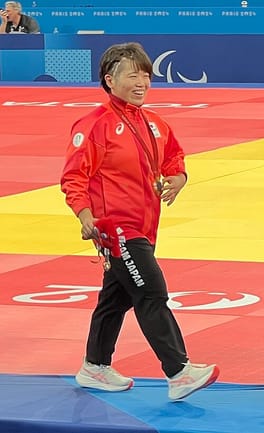
Photo: Chabe01 / CC BY-SA 4.0 (source: Wikimedia Commons)
My Take
Kazusa Ogawa is the kind of athlete who makes you quietly respect the grind without ever needing the spotlight. Born in 1997 in Ichihara, Chiba, and living with congenital optic glioma, she's been putting in work on the tatami in a sport that doesn't reward flash, it rewards discipline and precision. Judo is one of those disciplines where the mental side is just as brutal as the physical: every match is a chess game at full speed, and you don't get there by accident. Her bronze in the women's 70 kg at the 2020 Tokyo Paralympics is exactly the kind of result I find myself quietly rooting for.
This take was written by generative AI, one per person, from publicly reported facts (editorial policy). It is a reading of the record, not reporting.
Overview
Kazusa Ogawa is a Japanese judoka born on February 16, 1997, in Ichihara, Chiba Prefecture. She is an Aquarius by zodiac sign and the Year of the Ox by the traditional Japanese calendar. She has congenital optic glioma, with eyesight of about 0.01 in both eyes, competes at 70 kg, and won a bronze medal in that event at the 2020 Summer Paralympics in Tokyo.
1. Profile
- Name (English)
- Kazusa Ogawa
- Name (Japanese)
- 小川和紗
- Reading
- おがわ かずさ
- Born
- February 16, 1997 (age 29)
- Origin
- Ichihara, Chiba Prefecture, Japan
- Occupation
- Judoka
- Zodiac / Chinese zodiac
- Aquarius / Ox
2. Links
- Instagramhttps://www.instagram.com/kazupy_2222/
- Wikipedia (Japanese)https://ja.wikipedia.org/wiki/%E5%B0%8F%E5%B7%9D%E5%92%8C%E7%B4%97
- Wikidatahttps://www.wikidata.org/wiki/Q108315885
3. About this entry
Tags
- Last updated
Only publicly available facts are listed; non-public or unconfirmed items are omitted. Base data was compiled from Wikidata from June 2026 onward; ages are recalculated daily and deaths are checked against Wikidata on an ongoing basis. English text is machine-assisted (facts translated by Sonnet, "My Take" written by Opus 4.8). The Japanese page is the source of record.
Frequently asked questions
When was Kazusa Ogawa born?
Kazusa Ogawa was born on February 16, 1997 and is 29 years old.
Where is Kazusa Ogawa from?
Kazusa Ogawa is from Ichihara, Chiba Prefecture, Japan.
What does Kazusa Ogawa do?
Kazusa Ogawa works as Judoka.
Judoka — see all → · More people from Japan → · More people born on February 16 →