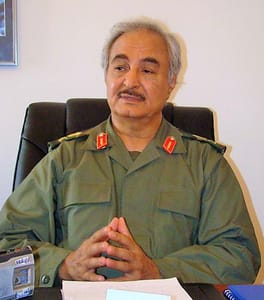
Photo: Magharebia / CC BY 2.0 (source: Wikimedia Commons)
Khalifa Belqasim Haftar was born on November 7, 1943 in Ajdabiya, Al Wahat District, Libya. Khalifa Belqasim Haftar is a military officer, politician and warlord. The age as of 2026 is 82. Education on record includes Benghazi Military University Academy. Listed accolades include Order of the Great September Revolution 1969 and Order of Courage.
My Take
Khalifa Haftar is a genuinely divisive figure, and I don't say that lightly. Born in 1943, he rose through Gaddafi's military, fell out spectacularly, spent years in American exile, then returned to become commander of the Tobruk-based Libyan National Army. Since 2011 he's been at the center of Libya's fracturing, and the label warlord that follows his name reflects how contested his role is. I find his arc a stark reminder that Libya never found stable footing after Gaddafi. Whatever one thinks of him, he's been impossible to ignore in the country's long crisis, and his influence has outlasted nearly every rival.
This take was written by generative AI, one per person, from publicly reported facts (editorial policy). It is a reading of the record, not reporting.
1. Profile
- Name (English)
- Khalifa Belqasim Haftar
- Name (Japanese)
- ハリファ・ハフタル
- Reading
- はりふぁ・はふたる
- Born
- November 7, 1943 (age 82)
- Origin
- Ajdabiya, Al Wahat District, Libya
- Occupation
- military officer / politician / warlord
- Zodiac / Chinese zodiac
- Scorpio / Goat
2. Background
- University
- Benghazi Military University Academy
Awards & achievements
- Order of the Great September Revolution 1969
- Order of Courage
3. Links
4. About this entry
Tags
- Last updated
Facts are limited to publicly available information up to 2024; non-public or unconfirmed items are omitted. English text is machine-assisted (facts translated by Sonnet, "My Take" written by Opus 4.8). The Japanese page is the source of record.
Frequently asked questions
When was Khalifa Belqasim Haftar born?
Born November 7, 1943 (age 82).
Where is Khalifa Belqasim Haftar from?
Khalifa Belqasim Haftar is from Ajdabiya, Al Wahat District, Libya.
What does Khalifa Belqasim Haftar do?
Khalifa Belqasim Haftar works as military officer, politician, warlord.
Military officer — see all → · Politician — see all → · More people from Libya →