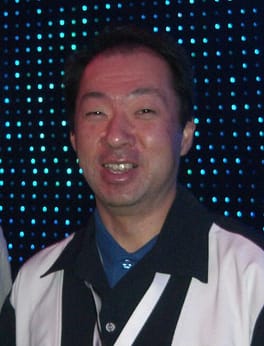
Photo: Vincent Diamante from Los Angeles, CA, USA / CC BY-SA 2.0 (source: Wikimedia Commons)
My Take
There's a good chance the first piece of music you ever truly loved was written by Koji Kondo — you just didn't know his name at the time. The Super Mario Bros. theme, the Legend of Zelda overworld, Hyrule Field from Ocarina of Time: these aren't background noise, they're emotional anchors burned into the childhoods of hundreds of millions of people across generations. What gets me is how much he accomplished with almost nothing — early Nintendo hardware gave him maybe four or five sound channels, and he turned that into melodies that somehow felt cinematic. He grew up in Nagoya, studied art at Osaka University of Arts, and ended up quietly reshaping what video game music could even aspire to be. No showy collaborations, no celebrity drama, just decades of craft. Genuinely one of the most influential composers alive, full stop.
This take was written by generative AI, one per person, from publicly reported facts (editorial policy). It is a reading of the record, not reporting.
Overview
Koji Kondo is a Japanese composer, pianist, and sound designer born on August 13, 1961, in Nagoya, Aichi Prefecture. He studied at Osaka University of the Arts. He is widely recognized for his work in video game music composition.
1. Profile
- Name (English)
- Koji Kondo
- Name (Japanese)
- 近藤浩治
- Reading
- こんどう こうじ
- Born
- August 13, 1961 (age 65)
- Origin
- Nagoya, Aichi Prefecture, Japan
- Occupation
- Composer / Pianist / Sound Designer
- Zodiac / Chinese zodiac
- Leo / Ox
- Active years
- 1984 -
2. Background
- University
- Osaka University of the Arts
3. Works & records
Works summary
- Works
- 100
Filmography / notable works
| Category | Title |
|---|---|
| Work | ゴルフ |
| Work | デビルワールド |
| Work | サッカー |
| Work | スパルタンX |
| Work | 謎の村雨城 |
| Work | 夢工場ドキドキパニック |
| Work | ふぁみこんむかし話 新・鬼ヶ島 |
| Work | マリオシリーズ |
| Work | スーパーマリオシリーズ |
| Work | スーパーマリオブラザーズ |
| Work | スーパーマリオブラザーズ2 |
| Work | スーパーマリオブラザーズ3 |
| Work | スーパーマリオワールド |
| Work | スーパーマリオUSA |
| Work | スーパーマリオ64 |
| Work | スーパーマリオサンシャイン |
| Work | New スーパーマリオブラザーズ |
| Work | スーパーマリオギャラクシー |
| Work | New スーパーマリオブラザーズ Wii |
| Work | スーパーマリオギャラクシー2 |
| Work | New スーパーマリオブラザーズ 2 |
| Work | New スーパーマリオブラザーズ U |
| Work | スーパーマリオ 3Dワールド |
| Work | スーパーマリオメーカー |
| Work | スーパーマリオ オデッセイ |
| Work | スーパーマリオブラザーズ ワンダー |
| Work | マリオパーティシリーズ |
| Work | マリオパーティ9 |
| Work | マリオパーティ アイランドツアー |
| Work | マリオパーティ10 |
| Work | マリオゴルフシリーズ |
| Work | マリオゴルフ64 |
| Work | マリオゴルフGB |
| Work | マリオゴルフ ファミリーツアー |
| Work | マリオゴルフGBAツアー |
| Work | マリオゴルフ ワールドツアー |
| Work | マリオテニスシリーズ |
| Work | マリオテニス64 |
| Work | マリオテニスGB |
| Work | マリオテニスGC |
| Work | マリオテニス オープン |
| Work | ペーパーマリオシリーズ |
| Work | マリオストーリー |
| Work | ペーパーマリオRPG |
| Work | スーパーペーパーマリオ |
| Work | ペーパーマリオ スーパーシール |
| Work | マリオカートアドバンス |
| Work | マリオ&ルイージRPGシリーズ |
| Work | マリオ&ルイージRPG |
| Work | マリオ&ルイージRPG2 |
| Work | マリオ&ルイージRPG3!!! |
| Work | マリオ&ルイージRPG4 ドリームアドベンチャー |
| Work | マリオvs.ドンキーコングシリーズ |
| Work | マリオvs.ドンキーコング |
| Work | マリオvs.ドンキーコング2 ミニミニ大行進! |
| Work | マリオvs.ドンキーコング ミニミニ再行進! |
| Work | マリオvs.ドンキーコング 突撃!ミニランド |
| Work | マリオ AND ドンキーコング ミニミニカーニバル |
| Work | マリオvs.ドンキーコング みんなでミニランド |
| Work | スーパーマリオスタジアムシリーズ |
4. Links
- Wikipedia (Japanese)https://ja.wikipedia.org/wiki/%E8%BF%91%E8%97%A4%E6%B5%A9%E6%B2%BB
- Wikidatahttps://www.wikidata.org/wiki/Q356782
5. About this entry
Tags
- Last updated
Only publicly available facts are listed; non-public or unconfirmed items are omitted. Base data was compiled from Wikidata from June 2026 onward; ages are recalculated daily and deaths are checked against Wikidata on an ongoing basis. Works and profile fields sourced from Wikipedia reflect content as of 2026-08-26. English text is machine-assisted (facts translated by Sonnet, "My Take" written by Opus 4.8). The Japanese page is the source of record.
Frequently asked questions
When was Koji Kondo born?
Koji Kondo was born on August 13, 1961 and is 65 years old.
Where is Koji Kondo from?
Koji Kondo is from Nagoya, Aichi Prefecture, Japan.
What does Koji Kondo do?
Koji Kondo works as Composer, Pianist, Sound Designer.
Where did Koji Kondo study?
Koji Kondo attended Osaka University of the Arts.
How long has Koji Kondo been active?
Koji Kondo has been active since 1984.
Composer — see all → · Pianist — see all → · More people from Japan → · More people born on August 13 →