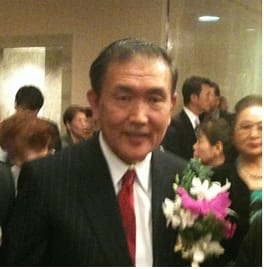
Photo: Ajtnk / Public domain (source: Wikimedia Commons)
My Take
What genuinely surprised me was the University of Pennsylvania credential; in postwar Japan, crossing the Pacific for an American education took serious nerve and vision, and it tells you he was never just a local player. Japanese politics produces a lot of loud voices, but the ones who stick around for decades usually have something more durable underneath — a stubborn core conviction, or at least the patience to look like they do. I don't know every vote he ever cast, but a man born in 1944, schooled abroad, and still active enough to maintain a presence into the 2020s has clearly chosen the long game. Old-school gravitas over headlines — that's the vibe I get from him.
This take was written by generative AI, one per person, from publicly reported facts (editorial policy). It is a reading of the record, not reporting.
Overview
Kōki Kobayashi is a Japanese politician born on January 1, 1944, in Tokyo. He studied at the University of Pennsylvania, bringing an international academic background to his political career. He is associated with the Yamato Party, as indicated by his official social media presence. A former trade ministry official, he served five terms in the House of Representatives and was Senior Vice-Minister of Finance under Junichiro Koizumi, and later helped found New Party Nippon.
1. Profile
- Name (English)
- Kōki Kobayashi
- Name (Japanese)
- 小林興起
- Reading
- こばやし こうき
- Born
- January 1, 1944 (age 82)
- Origin
- Tokyo, Japan
- Occupation
- Politician
- Zodiac / Chinese zodiac
- Capricorn / Monkey
2. Background
- University
- University of Pennsylvania
3. Links
4. About this entry
Tags
- Last updated
Only publicly available facts are listed; non-public or unconfirmed items are omitted. Base data was compiled from Wikidata from June 2026 onward; ages are recalculated daily and deaths are checked against Wikidata on an ongoing basis. English text is machine-assisted (facts translated by Sonnet, "My Take" written by Opus 4.8). The Japanese page is the source of record.
Frequently asked questions
When was Kōki Kobayashi born?
Kōki Kobayashi was born on January 1, 1944 and is 82 years old.
Where is Kōki Kobayashi from?
Kōki Kobayashi is from Tokyo, Japan.
What does Kōki Kobayashi do?
Kōki Kobayashi works as Politician.
Where did Kōki Kobayashi study?
Kōki Kobayashi attended University of Pennsylvania.
Politician — see all → · More people from Japan → · More people born on January 1 →