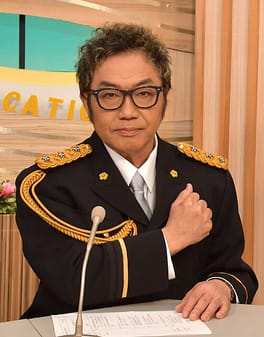
Photo: 警察庁 / CC BY 4.0 (source: Wikimedia Commons)
My Take
I have so much affection for Korokke, the guy who basically turned the Japanese art of monomane into a contortionist sport. Think about it: he named himself after a fried potato croquette, and somehow that's perfect, because there's nothing pretentious about him. He just wants you to laugh until you wheeze. Born in Kumamoto in 1960, he was past sixty by 2024 and still up there cranking his face into rubbery, impossible shapes with full-throttle energy that puts performers half his age to shame. What I love most is that the impressions never feel mean. There's real affection baked into every exaggeration, like he's celebrating the people he mimics rather than mocking them. He branched into voice acting and general TV work too, but at his core he's a lifer, an entertainer who just wants the living room warm.
This take was written by generative AI, one per person, from publicly reported facts (editorial policy). It is a reading of the record, not reporting.
Overview
Korokke is a Japanese comedy entertainer, talent, and voice actor born on March 13, 1960, in Minami Ward, Kumamoto Prefecture, Japan. He is widely known for his rubber-faced impressions and physical comedy. He attended Kaishin High School in Kumamoto. His blood type is B, and he is represented by his own company, Korokorokoro, in partnership with Very Berry Production.
1. Profile
- Name (English)
- Korokke
- Name (Japanese)
- コロッケ
- Reading
- ころっけ
- Born
- March 13, 1960 (age 66)
- Origin
- Minami Ward, Kumamoto Prefecture, Japan
- Height
- 170 cm
- Occupation
- Comedy Entertainer / Talent / Voice Actor
- Zodiac / Chinese zodiac
- Pisces / Rat
- Blood type
- B
- Agency
- Very Berry Production (partnership)
2. Background
- High school
- Kaishin High School
3. Works & records
Works summary
- Appearances
- 96 (1981–2026)
- By year (titles with a known year)
- 1981: 2, 1985: 3, 1986: 1, 1987: 1, 1988: 2, 1989: 2, 1990: 2, 1991: 4, 1992: 3, 1993: 1, 1994: 4, 1995: 1, 1996: 1, 1997: 2, 1998: 3, 2000: 1, 2001: 2, 2002: 1, 2003: 2, 2004: 2, 2005: 5, 2006: 2, 2007: 1, 2008: 3, 2009: 2, 2010: 3, 2012: 2, 2013: 2, 2014: 1, 2015: 1, 2016: 4, 2017: 2, 2018: 2, 2020: 1, 2021: 2, 2022: 3, 2023: 3, 2024: 1, 2025: 1, 2026: 1, year unknown: 14
- Debut work
- とびだせものまね大作戦
Filmography / notable works
| Category | Title | Role | Year |
|---|---|---|---|
| Stage | 松平健×コロッケ45周年特別公演 | 2026 | |
| Stage | 大逆転!戦国武将誉賑 | 2025 | |
| Stage | どこへ時が流れても~俺たちのジュークボックス~ | 2024 | |
| CM | HISモバイル ブランドアンバサダー | 2023 | |
| Stage | 大逆転!大江戸桜誉賑 | 2023 | |
| TV program | コロッケのよかもん珍道中 | 2022 | |
| TV drama | 警視庁捜査一課長season6 第3話 | 2022 | |
| Film | 京都カマロ探偵 | 2022 | |
| TV drama | がんばれ!TEAM NACS episode5 | 2021 | |
| TV drama | コインランドリー | as 清掃員 | 2020 |
| Film | 滝川広志 | 2018 | |
| TV program | マネードロー | 2017 | |
| ONE PIECE FILM GOLD | 2016 | ||
| MV | ザ・ゴールデン・ヒストリー | 2016 | |
| TV program | 極楽加藤のお節介な旅 | 2015 | |
| Crayon Shin-chan: Serious Battle! Robot Dad Strikes Back | as 頑馬博士 | 2014 | |
| TV program | コロッケ千夜一夜 | 2013 | |
| Crayon Shin-chan: Very Tasty! B-class Gourmet Survival!! | as 下町コロッケどん | 2013 | |
| TV program | コロッケぱらだいす ごきげん歌謡笑劇団 | 2012 | |
| TV drama | おんな風来マジシャン・マリコの殺人事件簿 | 2010 | |
| Radio program | ラジオマンジャック | 2010 | |
| TV program | ものまねグランプリ | 2009 | |
| TV program | 日本史サスペンス劇場 | as 瓦版屋、リポーター | 2008 |
| TV drama | 篤姫 | as 太助 | 2008 |
| Film | デコトラの鷲 | 2008 | |
| Radio program | ラジオマンジャック! | 2007 | |
| Film | デコトラの鷲 恋の花咲く清水港 | 2006 | |
| Stage | ご存知!夢芝居一座〜大笑い!さくら&まこと劇団 奮闘記〜 | 2006 | |
| TV program | 徳光&コロッケの“名曲の時間です” | 2005 | |
| Radio program | 歌謡ジャーナル | 2005 | |
| Radio program | ボイスパラダイス | 2005 | |
| Film | イントゥ・ザ・サン | 2005 | |
| Film | 同窓會 | 2004 | |
| TV drama | おふくろさん殺人事件!?モノマネが暴いた真犯人 | 2003 | |
| TV program | にっぽん愉快家族 | 2002 | |
| TV drama | 水戸黄門 第29部・第30部 | as 素破の次郎坊 | 2001 |
| Film | Kah-chan | 2001 | |
| Film | プロゴルファー織部金次郎5 愛しのロストボール | 1998 | |
| Film | プロゴルファー織部金次郎4 シャンクシャンクシャンク | 1997 | |
| Film | プロゴルファー織部金次郎3 飛べバーディー | 1995 | |
| TV program | キスした?SMAP | 1994 | |
| TV program | ものまねバトル | 1994 | |
| Film | 劇場版 家なき子 | 1994 | |
| TV program | 史上最高そっくり大賞 | 1993 | |
| TV program | コロッケ!!噂の芸能界 | 1992 | |
| TV program | 大相似形テレビ | 1992 | |
| TV drama | キライじゃないぜ | as 才野重盛 | 1992 |
| TV program | 決定版!!これが宜保愛子の霊能力だ! | 1991 | |
| TV program | 極楽スタジアム | 1991 | |
| TV program | そんなコロッケな!? | 1991 | |
| CM | こんがりコロッケ | 1991 | |
| TV drama | 将軍家光忍び旅 | as 新吉 | 1990 |
| TV program | 面白スタジアム | 1989 | |
| TV program | ものまね珍坊 | 1989 | |
| Radio program | スペシャル・コロッケ“並” | 1988 | |
| TV drama | それゆけ孔雀警視 | 1987 | |
| TV drama | ママ母VSママ娘、家出令嬢の課外授業 恋も別れももんじゃ焼! | 1986 | |
| TV program | ものまね王座決定戦 | 1985 | |
| TV drama | 私が家政婦を殺した! | 1985 | |
| TV drama | 暗闇でドッキリ 私は見た! | 1985 |
4. Links
5. About this entry
Tags
- Last updated
Only publicly available facts are listed; non-public or unconfirmed items are omitted. Base data was compiled from Wikidata from June 2026 onward; ages are recalculated daily and deaths are checked against Wikidata on an ongoing basis. Works and profile fields sourced from Wikipedia reflect content as of 2026-08-26. English text is machine-assisted (facts translated by Sonnet, "My Take" written by Opus 4.8). The Japanese page is the source of record.
Frequently asked questions
When was Korokke born?
Korokke was born on March 13, 1960 and is 66 years old.
Where is Korokke from?
Korokke is from Minami Ward, Kumamoto Prefecture, Japan.
What does Korokke do?
Korokke works as Comedy Entertainer, Talent, Voice Actor.
How tall is Korokke?
Korokke is 170 cm tall.
What is Korokke's blood type?
Korokke's blood type is B.
Which high school did Korokke attend?
Korokke attended Kaishin High School.
What agency is Korokke with?
Korokke is with Very Berry Production (partnership).
What is Korokke known for?
Korokke's notable works include ONE PIECE FILM GOLD.
Comedy Entertainer — see all → · Talent — see all → · More people from Japan → · More people born on March 13 →