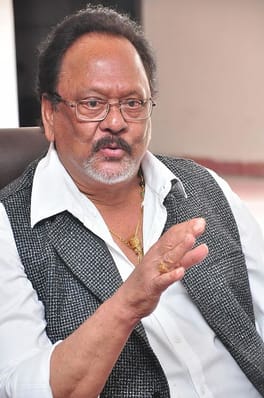
Photo: WP MANIKHANTA / CC BY-SA 3.0 (source: Wikimedia Commons)
Krishnam Raju, born on January 20, 1940 in Mogalthur, West Godavari district, India, was a politician, actor and film producer. Krishnam Raju died on September 11, 2022 at the age of 82. Education on record includes Sri Y N College. Listed accolades include Nandi Award and Filmfare Awards South.
My Take
Krishnam Raju floors me. Earning the nickname "Rebel Star" in Telugu cinema and headlining more than 183 features is the kind of output that belongs to a vanished era of larger-than-life leading men. Winning the inaugural Nandi Award for Best Actor, alongside a Filmfare honor, marks him as a genuine pioneer, and he didn't stop at acting, also working as a politician and producer, and winning a state-level prize for photography. From Mogalthur in West Godavari, he built an entire epoch of stardom on raw, defiant energy. Performers willing to be that unpolished and electric are rare now. He passed in 2022, but that heat lives on in the film.
This take was written by generative AI, one per person, from publicly reported facts (editorial policy). It is a reading of the record, not reporting.
1. Profile
- Name (English)
- Krishnam Raju
- Name (Japanese)
- クリシュナン・ラージュ
- Reading
- くりしゅなん・らーじゅ
- Born
- January 20, 1940 – September 11, 2022
- Origin
- Mogalthur, West Godavari district, India
- Occupation
- politician / actor / film producer / photojournalist
- Zodiac / Chinese zodiac
- Aquarius / Dragon
2. Background
- University
- Sri Y N College
Awards & achievements
- Nandi Award
- Filmfare Awards South
3. Links
- Xhttps://x.com/UVKrishnamRaju
- Wikipedia (English)https://en.wikipedia.org/wiki/Krishnam%20Raju
- Wikidatahttps://www.wikidata.org/wiki/Q6437529
4. About this entry
Tags
- Last updated
Facts are limited to publicly available information up to 2024; non-public or unconfirmed items are omitted. English text is machine-assisted (facts translated by Sonnet, "My Take" written by Opus 4.8). The Japanese page is the source of record.
Frequently asked questions
When was Krishnam Raju born?
Krishnam Raju was born on January 20, 1940.
When did Krishnam Raju die?
Krishnam Raju died on September 11, 2022, aged 82.
Where was Krishnam Raju from?
Krishnam Raju was from Mogalthur, West Godavari district, India.
What did Krishnam Raju do?
Krishnam Raju worked as politician, actor, film producer, photojournalist.
Where did Krishnam Raju study?
Krishnam Raju attended Sri Y N College.
Politician — see all → · Actor — see all → · More people from India → · More people born on January 20 →