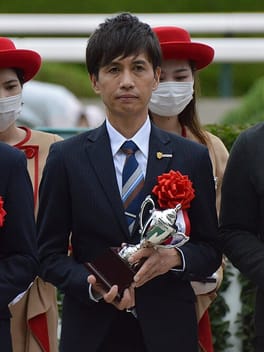
Photo: Nadaraikon / CC BY-SA 3.0 (source: Wikimedia Commons)
My Take
Honestly, there's something quietly compelling about Kunihiko Watanabe that you don't get from your average celebrity profile. Born in 1975, this guy built his career straddling two of the most demanding roles in Japanese horse racing — first as a jockey, actually on the horse, reading its mood and muscle at full gallop, and then transitioning into training, which is a completely different kind of mastery. Going from riding to training isn't a lateral move; it's like a concert violinist becoming a conductor. You're suddenly responsible for the whole system, not just your own performance. Most of his personal life stays private, which honestly just adds to the impression of a craftsman who lets the results do the talking. That's the kind of quiet professional I genuinely respect.
This take was written by generative AI, one per person, from publicly reported facts (editorial policy). It is a reading of the record, not reporting.
Overview
Kunihiko Watanabe is a Japanese thoroughbred racing professional born on April 5, 1975. He has worked in the sport both as a jockey and as a horse trainer. His prefecture of origin and most personal details are not publicly disclosed.
1. Profile
- Name (English)
- Kunihiko Watanabe
- Name (Japanese)
- 渡辺薫彦
- Reading
- わたなべ くにひこ
- Born
- April 5, 1975 (age 51)
- Origin
- Japan
- Occupation
- Jockey / Horse Trainer
- Zodiac / Chinese zodiac
- Aries / Rabbit
2. Links
- Wikipedia (Japanese)https://ja.wikipedia.org/wiki/%E6%B8%A1%E8%BE%BA%E8%96%AB%E5%BD%A6
- Wikidatahttps://www.wikidata.org/wiki/Q11562533
3. About this entry
Tags
- Last updated
Facts are limited to publicly available information up to 2024; non-public or unconfirmed items are omitted. English text is machine-assisted (facts translated by Sonnet, "My Take" written by Opus 4.8). The Japanese page is the source of record.
Frequently asked questions
When was Kunihiko Watanabe born?
Born April 5, 1975 (age 51).
Where is Kunihiko Watanabe from?
Kunihiko Watanabe is from Japan.
What does Kunihiko Watanabe do?
Kunihiko Watanabe works as Jockey, Horse Trainer.