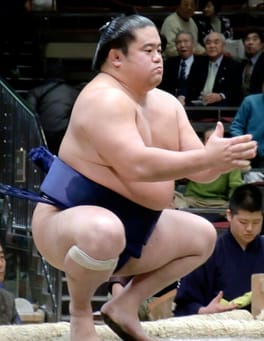
Photo: FourTildes / CC BY-SA 3.0 (source: Wikimedia Commons)
My Take
There's something quietly compelling about Kyokunankai Hiromitsu that I can't shake. He came up from Amami-Oshima — that remote, subtropical island tucked between Kyushu and Okinawa — and carried it right into his ring name, "Nankai" meaning the southern sea. That kind of move, embedding your hometown into the name you fight under, tells you a lot about a person before you even see them step onto the dohyo. The details of his career are sparse in the public record, which honestly makes him feel more real to me, not every wrestler gets the spotlight, but they still put in the work day after day in practice and on the clay. A son of the southern sea, quietly grinding — I respect that.
This take was written by generative AI, one per person, from publicly reported facts (editorial policy). It is a reading of the record, not reporting.
Overview
Kyokunankai Hiromitsu is a Japanese sumo wrestler born on December 14, 1977, in Amagi Town, Kagoshima Prefecture. His shikona (ring name) incorporates "Nankai," reflecting his origins in the southern islands of Kagoshima. Detailed career records are not widely publicized, and most personal information remains private.
1. Profile
- Name (English)
- Kyokunankai Hiromitsu
- Name (Japanese)
- 旭南海廣光
- Reading
- きょくなんかい じょういちろう
- Born
- December 14, 1977 (age 48)
- Origin
- Amagi Town, Kagoshima Prefecture, Japan
- Occupation
- Sumo wrestler
- Zodiac / Chinese zodiac
- Sagittarius / Snake
2. Links
3. About this entry
Tags
- Last updated
Facts are limited to publicly available information up to 2024; non-public or unconfirmed items are omitted. English text is machine-assisted (facts translated by Sonnet, "My Take" written by Opus 4.8). The Japanese page is the source of record.
Frequently asked questions
When was Kyokunankai Hiromitsu born?
Born December 14, 1977 (age 48).
Where is Kyokunankai Hiromitsu from?
Kyokunankai Hiromitsu is from Amagi Town, Kagoshima Prefecture, Japan.
What does Kyokunankai Hiromitsu do?
Kyokunankai Hiromitsu works as Sumo wrestler.