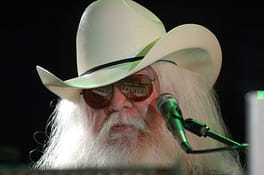
Photo: Carl Lender / CC BY 2.0 (source: Wikimedia Commons)
Leon Russell was born in Lawton, Oklahoma, United States on April 2, 1942. Leon Russell was a singer, singer-songwriter and pianist. Death is recorded on November 13, 2016, at the age of 74. Schooling on record includes Will Rogers High School. Listed accolades include Rock and Roll Hall of Fame (2011), Oklahoma Music Hall of Fame (2006) and Grammy Award for Album of the Year.
My Take
Leon Russell is one of those names that serious music fans know as the invisible engine behind so much of what made the late '60s and '70s sound so good. Before his own solo career took off, he was the guy in the room — a ridiculously gifted session pianist and arranger who played on hundreds of recordings for artists ranging from the Byrds to Frank Sinatra to Joe Cocker. His performance at the Concert for Bangladesh in 1971 is the kind of thing you watch once and never forget: white suit, wild hair, a voice like gravel and gospel fused together, absolutely commanding the stage. "A Song for You" alone is enough to cement his legacy forever. Getting into the Rock and Roll Hall of Fame in 2011, after decades of being criminally underrated, felt like the music world finally catching up. He was the real deal — a Tulsa original who quietly shaped American music more than most people will ever realize.
This take was written by generative AI, one per person, from publicly reported facts (editorial policy). It is a reading of the record, not reporting.
1. Profile
- Name (English)
- Leon Russell
- Name (Japanese)
- レオン・ラッセル
- Reading
- れおん・らっせる
- Born
- April 2, 1942 – November 13, 2016
- Origin
- Lawton, Oklahoma, United States
- Occupation
- singer / singer-songwriter / pianist / guitarist / mandolinist
- Zodiac / Chinese zodiac
- Aries / Horse
2. Background
- High school
- Will Rogers High School
Awards & achievements
- 2011 Rock and Roll Hall of Fame
- 2006 Oklahoma Music Hall of Fame
- Grammy Award for Album of the Year
3. Links
- Official sitehttps://www.leonrussellrecords.com/
- Wikipedia (English)https://en.wikipedia.org/wiki/Leon%20Russell
- Wikipedia (Japanese)https://ja.wikipedia.org/wiki/%E3%83%AC%E3%82%AA%E3%83%B3%E3%83%BB%E3%83%A9%E3%83%83%E3%82%BB%E3%83%AB
- Wikidatahttps://www.wikidata.org/wiki/Q319374
4. About this entry
Tags
- Last updated
Facts are limited to publicly available information up to 2024; non-public or unconfirmed items are omitted. English text is machine-assisted (facts translated by Sonnet, "My Take" written by Opus 4.8). The Japanese page is the source of record.
Frequently asked questions
When was Leon Russell born?
Born April 2, 1942.
When did Leon Russell die?
Died November 13, 2016, aged 74.
Where was Leon Russell from?
Leon Russell was from Lawton, Oklahoma, United States.
What did Leon Russell do?
Leon Russell worked as singer, singer-songwriter, pianist, guitarist, mandolinist.
Singer — see all → · Singer-songwriter — see all → · More people from the United States →