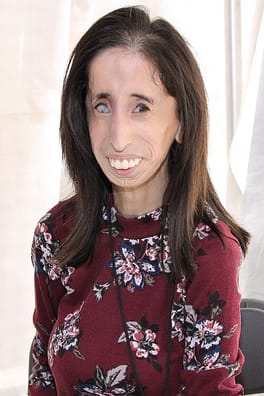
Photo: Larry D. Moore / CC BY 4.0 (source: Wikimedia Commons)
Lizzie Velasquez was born on March 13, 1989 in Austin, Texas, United States and is credited as a motivational speaker, autobiographer and human rights defender. Lizzie Velasquez is 37 years old as of 2026. Education on record includes Texas State University.
My Take
Lizzie Velasquez is someone I admire for turning a deeply painful start into genuine purpose. Born in 1989 with the extremely rare Marfanoid-progeroid-lipodystrophy syndrome, she faced cruel bullying as a child, yet she built a career as a motivational speaker, author, activist and YouTuber out of Austin. What moves me is that she chose to face the hardest parts of her story publicly rather than hide from them. I see her less as a celebrity and more as an advocate who reframed adversity into a message about dignity. That kind of resilience, paired with the willingness to speak openly, is rare and worth respecting.
This take was written by generative AI, one per person, from publicly reported facts (editorial policy). It is a reading of the record, not reporting.
1. Profile
- Name (English)
- Lizzie Velasquez
- Name (Japanese)
- リジー・ベラスケス
- Reading
- りじー・べらすけす
- Born
- March 13, 1989 (age 37)
- Origin
- Austin, Texas, United States
- Occupation
- motivational speaker / autobiographer / human rights defender / writer / YouTuber
- Zodiac / Chinese zodiac
- Pisces / Snake
2. Background
- University
- Texas State University
3. Links
4. About this entry
Tags
- Last updated
Facts are limited to publicly available information up to 2024; non-public or unconfirmed items are omitted. English text is machine-assisted (facts translated by Sonnet, "My Take" written by Opus 4.8). The Japanese page is the source of record.
Frequently asked questions
When was Lizzie Velasquez born?
Born March 13, 1989 (age 37).
Where is Lizzie Velasquez from?
Lizzie Velasquez is from Austin, Texas, United States.
What does Lizzie Velasquez do?
Lizzie Velasquez works as motivational speaker, autobiographer, human rights defender, writer, YouTuber.
Motivational speaker — see all → · Autobiographer — see all → · More people from the United States →