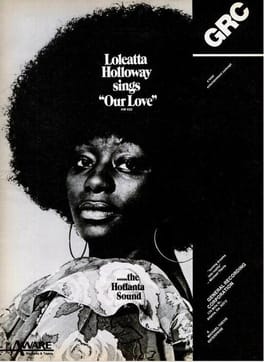
Photo: General Recording Corporation (GRC) / Public domain (source: Wikimedia Commons)
Loleatta Holloway was a singer. Loleatta Holloway was born on November 5, 1946 in Chicago, Illinois, United States. Death is recorded on March 21, 2011, at the age of 64.
My Take
Loleatta Holloway is one of the great unsung engines of dance music, and that quietly frustrates me. The voice on Love Sensation and Hit and Run is pure gospel-trained power, yet most people who have danced to it never knew her name, because her vocals got sampled into other people's hits, most famously Black Box's Ride on Time in 1989. The Independent calling her the most sampled female singer in popular music says it all: her sound is everywhere even when the credit was not. Billboard ranking her 95th among dance artists feels low to me given how much of the genre she invisibly powers.
This take was written by generative AI, one per person, from publicly reported facts (editorial policy). It is a reading of the record, not reporting.
1. Profile
- Name (English)
- Loleatta Holloway
- Name (Japanese)
- ロリータ・ハラウェイ
- Reading
- ろりーた・はらうぇい
- Born
- November 5, 1946 – March 21, 2011
- Origin
- Chicago, Illinois, United States
- Occupation
- singer
- Zodiac / Chinese zodiac
- Scorpio / Dog
2. Links
3. About this entry
Tags
- Last updated
Facts are limited to publicly available information up to 2024; non-public or unconfirmed items are omitted. English text is machine-assisted (facts translated by Sonnet, "My Take" written by Opus 4.8). The Japanese page is the source of record.
Frequently asked questions
When was Loleatta Holloway born?
Loleatta Holloway was born on November 5, 1946.
When did Loleatta Holloway die?
Loleatta Holloway died on March 21, 2011, aged 64.
Where was Loleatta Holloway from?
Loleatta Holloway was from Chicago, Illinois, United States.
What did Loleatta Holloway do?
Loleatta Holloway worked as singer.
Singer — see all → · More people from the United States → · More people born on November 5 →