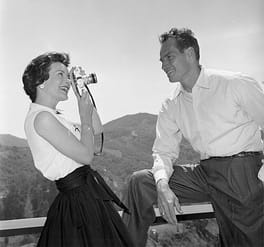
Photo: Los Angeles Times / CC BY 4.0 (source: Wikimedia Commons)
Lydia Clarke was credited as a photographer, television actor and stage actor. Born on April 14, 1923, Lydia Clarke was from Two Rivers, Wisconsin, United States. Death is recorded on September 3, 2018, at the age of 95. Education on record includes Northwestern University. Listed accolades include Theatre World Award (1950).
My Take
Lydia Clarke is the sort of figure I wish more people remembered. A Northwestern-trained stage actress who earned a 1950 Theatre World Award, she also worked as a photographer and lived much of her public life beside Charlton Heston. What draws me to her is that dual identity: a performer who also stood behind the camera, observing and documenting rather than only being observed. Too often women of that era are reduced to the role of famous spouse, but a Theatre World Award and a serious photographic eye tell me hers was a creative life in its own right. Living to ninety-five, she clearly had a quiet, lasting strength I find deeply admirable.
This take was written by generative AI, one per person, from publicly reported facts (editorial policy). It is a reading of the record, not reporting.
1. Profile
- Name (English)
- Lydia Clarke
- Name (Japanese)
- リディア・クラーク
- Reading
- りでぃあ・くらーく
- Born
- April 14, 1923 – September 3, 2018
- Origin
- Two Rivers, Wisconsin, United States
- Occupation
- actor / photographer / television actor / stage actor / film actor
- Zodiac / Chinese zodiac
- Aries / Boar
2. Background
- University
- Northwestern University
Awards & achievements
- 1950 Theatre World Award
3. Links
- Wikipedia (English)https://en.wikipedia.org/wiki/Lydia%20Clarke
- Wikidatahttps://www.wikidata.org/wiki/Q3269201
4. About this entry
Tags
- Last updated
Facts are limited to publicly available information up to 2024; non-public or unconfirmed items are omitted. English text is machine-assisted (facts translated by Sonnet, "My Take" written by Opus 4.8). The Japanese page is the source of record.
Frequently asked questions
When was Lydia Clarke born?
Lydia Clarke was born on April 14, 1923.
When did Lydia Clarke die?
Lydia Clarke died on September 3, 2018, aged 95.
Where was Lydia Clarke from?
Lydia Clarke was from Two Rivers, Wisconsin, United States.
What did Lydia Clarke do?
Lydia Clarke worked as actor, photographer, television actor, stage actor, film actor.
Where did Lydia Clarke study?
Lydia Clarke attended Northwestern University.
Actor — see all → · Photographer — see all → · More people from the United States → · More people born on April 14 →