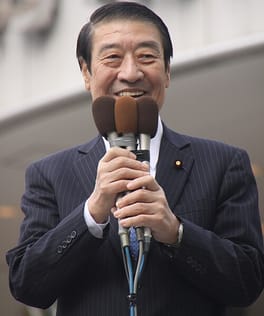
Photo: 多摩に暇人 / CC BY-SA 3.0 (source: Wikimedia Commons)
My Take
Honestly, the combo of lawyer and politician doesn't always inspire confidence — plenty of people wear both hats without ever really standing for anything — but with Masahiko Yamada I get the sense the law degree came first because he actually wanted the tools to fight. Born in 1942 on Goto Island out in the far edge of Nagasaki, surrounded by ocean and a community that had to be self-reliant, he went all the way to Waseda and came back to the world not as a scholar but as someone who stepped into the arena. I don't know enough of his specific battles to rank him, but a guy who bothers to run for office when he already has a law career is usually doing it because something genuinely bothered him. I find that quietly compelling.
This take was written by generative AI, one per person, from publicly reported facts (editorial policy). It is a reading of the record, not reporting.
Overview
Masahiko Yamada is a Japanese politician and lawyer born on April 8, 1942, in Fukue City, Nagasaki Prefecture. He studied at Waseda University, where he laid the foundation for his dual career in law and politics. His background as an attorney distinguishes him among Japanese legislators, reflecting a career built on legal expertise alongside public service.
1. Profile
- Name (English)
- Masahiko Yamada
- Name (Japanese)
- 山田正彦
- Reading
- やまだ まさひこ
- Born
- April 8, 1942 (age 84)
- Origin
- Fukue City, Nagasaki Prefecture, Japan
- Occupation
- Politician / Lawyer
- Zodiac / Chinese zodiac
- Aries / Horse
2. Background
- University
- Waseda University
3. Links
4. About this entry
Tags
- Last updated
Only publicly available facts are listed; non-public or unconfirmed items are omitted. Base data was compiled from Wikidata from June 2026 onward; ages are recalculated daily and deaths are checked against Wikidata on an ongoing basis. English text is machine-assisted (facts translated by Sonnet, "My Take" written by Opus 4.8). The Japanese page is the source of record.
Frequently asked questions
When was Masahiko Yamada born?
Masahiko Yamada was born on April 8, 1942 and is 84 years old.
Where is Masahiko Yamada from?
Masahiko Yamada is from Fukue City, Nagasaki Prefecture, Japan.
What does Masahiko Yamada do?
Masahiko Yamada works as Politician, Lawyer.
Where did Masahiko Yamada study?
Masahiko Yamada attended Waseda University.
Politician — see all → · Lawyer — see all → · More people from Japan → · More people born on April 8 →