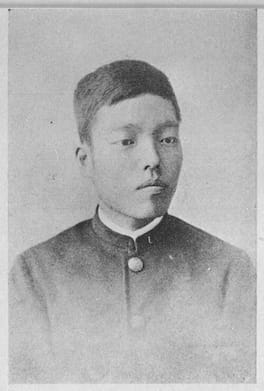
Photo: Unknown author / Public domain (source: Wikimedia Commons)
Public records list Masaoka Shiki as a baseball player, writer and journalist. Born on October 14, 1867, Masaoka Shiki was from Matsuyama, Ehime Prefecture, Japan. Death is recorded on September 19, 1902, at the age of 34. Education on record includes Kaisei Junior & Senior High School and Tokyo Imperial University. Recorded honors include Japanese Baseball Hall of Fame and Nihon Ki-in Hall of Fame.
My Take
A haiku poet who sits in both the Japanese Baseball Hall of Fame and the go hall of fame is not a sentence I expected to write, and Masaoka Shiki managed it inside thirty-four years. Born in Matsuyama, he reached Tokyo Imperial University, then spent his last years bedridden while producing close to twenty thousand verses. His most quoted line - biting a persimmon, a temple bell sounding at Horyuji - uses almost no ornament and still hands you an entire autumn. The one about fifteen or so cockscombs in a garden was argued over for decades, but read it as the exact field of vision of a man who could only look out at a small yard and it lands very differently. He preached sketching from life. What he meant was: look properly. Nobody looked harder.
This take was written by generative AI, one per person, from publicly reported facts (editorial policy). It is a reading of the record, not reporting.
1. Profile
- Name (English)
- Masaoka Shiki
- Name (Japanese)
- 正岡子規
- Reading
- まさおか しき
- Born
- October 14, 1867 – September 19, 1902
- Origin
- Matsuyama, Ehime Prefecture, Japan
- Occupation
- poet / baseball player / writer / journalist / waka poet
- Zodiac / Chinese zodiac
- Libra / Rabbit
2. Background
- High school
- Kaisei Junior & Senior High School
- University
- Tokyo Imperial University
Awards & achievements
- Japanese Baseball Hall of Fame
- Nihon Ki-in Hall of Fame
3. Works & records
Filmography / notable works
| Category | Title |
|---|---|
| Notable work | Kaki kueba kane ga narunari Hōryū-ji |
| Notable work | Keitō no jūshigohon moarinubeshi |
4. Links
- Wikipedia (English)https://en.wikipedia.org/wiki/Masaoka%20Shiki
- Wikipedia (Japanese)https://ja.wikipedia.org/wiki/%E6%AD%A3%E5%B2%A1%E5%AD%90%E8%A6%8F
- Wikidatahttps://www.wikidata.org/wiki/Q315152
5. About this entry
Tags
- Last updated
Facts are limited to publicly available information up to 2024; non-public or unconfirmed items are omitted. English text is machine-assisted (facts translated by Sonnet, "My Take" written by Opus 4.8). The Japanese page is the source of record.
Frequently asked questions
When was Masaoka Shiki born?
Born October 14, 1867.
When did Masaoka Shiki die?
Died September 19, 1902, aged 34.
Where was Masaoka Shiki from?
Masaoka Shiki was from Matsuyama, Ehime Prefecture, Japan.
What did Masaoka Shiki do?
Masaoka Shiki worked as poet, baseball player, writer, journalist, waka poet.
What was Masaoka Shiki known for?
Notable works include Kaki kueba kane ga narunari Hōryū-ji, Keitō no jūshigohon moarinubeshi.
Poet — see all → · Baseball player — see all → · More people from Japan →