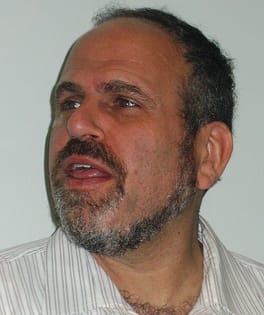
Photo: Faizul Latif Chowdhury (talk) / Public domain (source: Wikimedia Commons)
The date of birth on record is December 27, 1963. Matthew Rabin is listed as an economist and university teacher. As of 2026, Matthew Rabin is 62 years old. Education on record includes Springbrook High School and University of Wisconsin–Madison. Listed accolades include Sloan Fellowship (1995), John Bates Clark Medal (2001), MacArthur Fellows Program (2000) and 3 more.
My Take
Matthew Rabin sits in a category of his own for me. Insisting that economic models account for the fact that humans don't behave like flawless calculators took real intellectual nerve, and the haul of honors backs it up: a Sloan, a MacArthur, and the Clark Medal reserved for the discipline's brightest minds under forty. What I appreciate most is the empathy beneath the rigor. We all fumble our purchases and investments through emotion, and Rabin treated that frailty not as a moral failing but as a serious object of study. There's a generosity in that perspective, and it makes his work quietly humane.
This take was written by generative AI, one per person, from publicly reported facts (editorial policy). It is a reading of the record, not reporting.
1. Profile
- Name (English)
- Matthew Rabin
- Name (Japanese)
- マシュー・ラビン
- Reading
- ましゅー・らびん
- Born
- December 27, 1963 (age 62)
- Occupation
- economist / university teacher
- Zodiac / Chinese zodiac
- Capricorn / Rabbit
2. Background
- High school
- Springbrook High School
- University
- University of Wisconsin–Madison
Awards & achievements
- 1995 Sloan Fellowship
- 2001 John Bates Clark Medal
- 2000 MacArthur Fellows Program
- 2006 John von Neumann Award
- 2000 Fellow of the Econometric Society
- 2009 Clarivate Citation Laureates
3. Links
- Wikipedia (English)https://en.wikipedia.org/wiki/Matthew%20Rabin
- Wikipedia (Japanese)https://ja.wikipedia.org/wiki/%E3%83%9E%E3%82%B7%E3%83%A5%E3%83%BC%E3%83%BB%E3%83%A9%E3%83%93%E3%83%B3
- Wikidatahttps://www.wikidata.org/wiki/Q1400143
4. About this entry
Tags
- Last updated
Facts are limited to publicly available information up to 2024; non-public or unconfirmed items are omitted. English text is machine-assisted (facts translated by Sonnet, "My Take" written by Opus 4.8). The Japanese page is the source of record.
Frequently asked questions
When was Matthew Rabin born?
Born December 27, 1963 (age 62).
What does Matthew Rabin do?
Matthew Rabin works as economist, university teacher.