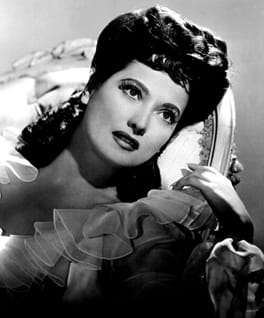
Photo: Studio / Public domain (source: Wikimedia Commons)
Merle Oberon was born in Mumbai, Bombay State, India on February 19, 1911. Merle Oberon was a screenwriter and film actor. Death is recorded on November 23, 1979, at the age of 68. Awards on record include star on Hollywood Walk of Fame.
My Take
Merle Oberon is one of those Golden Age Hollywood figures who deserves far more attention than she tends to get today. Born in Bombay in 1911 and raised in colonial India, she reinvented herself in British cinema and then crossed the Atlantic to become a genuine leading lady in 1930s and 1940s Hollywood — which, for a woman of mixed Sri Lankan Burgher heritage in that era, was a remarkable and complicated achievement. Her turn opposite Laurence Olivier in Wuthering Heights (1939) is still electric, and her Oscar nomination for The Dark Angel (1935) shows she was no mere ornament. She was also quietly one of the savvier survivors in an industry that chewed people up. The way she navigated questions about her origins — having to obscure her background for decades just to work — makes her story feel both deeply sad and genuinely fascinating.
This take was written by generative AI, one per person, from publicly reported facts (editorial policy). It is a reading of the record, not reporting.
1. Profile
- Name (English)
- Merle Oberon
- Name (Japanese)
- マール・オベロン
- Reading
- まーる・おべろん
- Born
- February 19, 1911 – November 23, 1979
- Origin
- Mumbai, Bombay State, India
- Occupation
- screenwriter / film actor / actor
- Zodiac / Chinese zodiac
- Pisces / Boar
2. Background
Awards & achievements
- star on Hollywood Walk of Fame
3. Links
- Wikipedia (English)https://en.wikipedia.org/wiki/Merle%20Oberon
- Wikipedia (Japanese)https://ja.wikipedia.org/wiki/%E3%83%9E%E3%83%BC%E3%83%AB%E3%83%BB%E3%82%AA%E3%83%99%E3%83%AD%E3%83%B3
- Wikidatahttps://www.wikidata.org/wiki/Q230958
4. About this entry
Tags
- Last updated
Only publicly available facts are listed; non-public or unconfirmed items are omitted. Base data was compiled from Wikidata from June 2026 onward; ages are recalculated daily and deaths are checked against Wikidata on an ongoing basis. English text is machine-assisted (facts translated by Sonnet, "My Take" written by Opus 4.8). The Japanese page is the source of record.
Frequently asked questions
When was Merle Oberon born?
Merle Oberon was born on February 19, 1911.
When did Merle Oberon die?
Merle Oberon died on November 23, 1979, aged 68.
Where was Merle Oberon from?
Merle Oberon was from Mumbai, Bombay State, India.
What did Merle Oberon do?
Merle Oberon worked as screenwriter, film actor, actor.
Screenwriter — see all → · Film actor — see all → · More people from India → · More people born on February 19 →