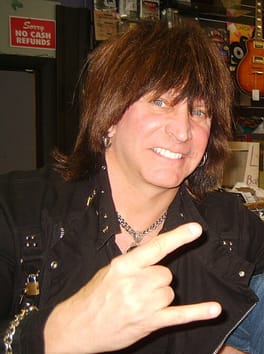
Photo: minimoniotaku / CC BY 2.0 (source: Wikimedia Commons)
Michael Angelo Batio was born in Chicago, Illinois, United States on June 12, 1956. Michael Angelo Batio is a guitarist, musician and music educator. That works out to 70 years old in 2026. Education on record includes Northeastern Illinois University.
My Take
Few guitarists exist in quite the same stratosphere of sheer technical obsession as Michael Angelo Batio, and I mean that as the highest compliment. This Chicago-born speed demon didn't just play fast — he redefined what fast even meant, earning a reputation as one of the fastest guitarists on the planet while simultaneously popularizing the double-necked guitar in ways that looked almost cartoonishly impossible until you realized he was dead serious. His work with the glam metal outfit Nitro in the late '80s and early '90s gave him a wider stage, but it's his solo instructional work and clinics that cemented his legend among guitarists who actually practice. The neoclassical influence running through his playing gives it a discipline and architecture that pure shredders often lack. He's a music educator at heart — a guy who genuinely wants you to understand what he's doing — and that generosity of spirit makes the blazing technique feel earned rather than just flashy.
This take was written by generative AI, one per person, from publicly reported facts (editorial policy). It is a reading of the record, not reporting.
1. Profile
- Name (English)
- Michael Angelo Batio
- Name (Japanese)
- マイケル・アンジェロ
- Reading
- まいける・あんじぇろ
- Born
- June 12, 1956 (age 70)
- Origin
- Chicago, Illinois, United States
- Occupation
- guitarist / musician / music educator
- Zodiac / Chinese zodiac
- Gemini / Monkey
2. Background
- University
- Northeastern Illinois University
3. Links
- Official sitehttp://www.angelo.com
- Instagramhttps://www.instagram.com/michaelangelobatioofficial/
- Xhttps://x.com/m_angelobatio
- Wikipedia (English)https://en.wikipedia.org/wiki/Michael%20Angelo%20Batio
- Wikipedia (Japanese)https://ja.wikipedia.org/wiki/%E3%83%9E%E3%82%A4%E3%82%B1%E3%83%AB%E3%83%BB%E3%82%A2%E3%83%B3%E3%82%B8%E3%82%A7%E3%83%AD
- Wikidatahttps://www.wikidata.org/wiki/Q433726
4. About this entry
Tags
- Last updated
Facts are limited to publicly available information up to 2024; non-public or unconfirmed items are omitted. English text is machine-assisted (facts translated by Sonnet, "My Take" written by Opus 4.8). The Japanese page is the source of record.
Frequently asked questions
When was Michael Angelo Batio born?
Born June 12, 1956 (age 70).
Where is Michael Angelo Batio from?
Michael Angelo Batio is from Chicago, Illinois, United States.
What does Michael Angelo Batio do?
Michael Angelo Batio works as guitarist, musician, music educator.
Guitarist — see all → · Musician — see all → · More people from the United States →