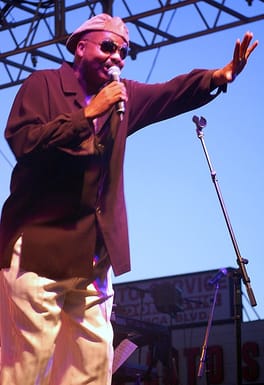
Photo: Mykal Burns! / CC BY 2.0 (source: Wikimedia Commons)
Michael Henderson was born in Yazoo City, Mississippi, United States on July 7, 1951. Public records list Michael Henderson as a bassist, singer and musician. Death is recorded on July 19, 2022, at the age of 71.
My Take
Michael Henderson had one of those careers that quietly underpins music history. Playing bass for Miles Davis on landmark fusion records like Jack Johnson, Live-Evil, and Agharta in the early 1970s would be a career for most people, yet he then reinvented himself as an R&B and soul vocalist with hits like You Are My Starship. That dual identity, sideman to one of jazz's most demanding bandleaders and then a smooth soul frontman, is what I admire most. Coming out of Yazoo City, Mississippi, he carried a deep groove sensibility into everything. His death in 2022 closed the book on a genuinely versatile musician.
This take was written by generative AI, one per person, from publicly reported facts (editorial policy). It is a reading of the record, not reporting.
1. Profile
- Name (English)
- Michael Henderson
- Name (Japanese)
- マイケル・ヘンダーソン
- Reading
- まいける・へんだーそん
- Born
- July 7, 1951 – July 19, 2022
- Origin
- Yazoo City, Mississippi, United States
- Occupation
- bassist / singer / musician / record producer
- Zodiac / Chinese zodiac
- Cancer / Rabbit
2. Links
3. About this entry
Tags
- Last updated
Facts are limited to publicly available information up to 2024; non-public or unconfirmed items are omitted. English text is machine-assisted (facts translated by Sonnet, "My Take" written by Opus 4.8). The Japanese page is the source of record.
Frequently asked questions
When was Michael Henderson born?
Born July 7, 1951.
When did Michael Henderson die?
Died July 19, 2022, aged 71.
Where was Michael Henderson from?
Michael Henderson was from Yazoo City, Mississippi, United States.
What did Michael Henderson do?
Michael Henderson worked as bassist, singer, musician, record producer.
Bassist — see all → · Singer — see all → · More people from the United States →