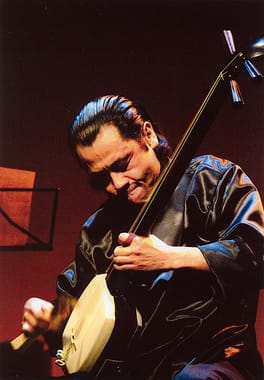
Photo: Aoistudio / CC BY-SA 3.0 (source: Wikimedia Commons)
My Take
Michihiro Sato is a shamisen player, and specifically a Tsugaru shamisen player — which, if you've never heard it, is nothing like the gentle plucking you might picture. Tsugaru-style is loud, percussive, almost ferocious, born out of the brutal winters of northern Japan as a survival art for wandering blind musicians. What I find quietly fascinating about Sato is that he's a Tokyo kid who committed his life to music rooted deep in Tohoku's soil — there's a whole untold story in that gap. His official site domain has "tsugaru-michihiro" baked right in, so clearly that identity is the whole thing for him. He keeps almost no public profile — no social media footprint, no flashy PR — and honestly that restraint fits. The best Tsugaru players let the instrument do the talking, and if the music is right, you don't need to explain yourself.
This take was written by generative AI, one per person, from publicly reported facts (editorial policy). It is a reading of the record, not reporting.
Overview
Michihiro Sato is a Japanese shamisen player born on July 19, 1957, in Tokyo, Japan. He is associated with the Tsugaru-shamisen tradition, a style originating in the Tohoku region known for its powerful and percussive playing technique. He maintains an official website under the domain tsugaru-michihiro.com. Further biographical details, including his active period and agency affiliation, are not publicly disclosed.
1. Profile
- Name (English)
- Michihiro Sato
- Name (Japanese)
- 佐藤通弘
- Reading
- さとう みちひろ
- Born
- July 19, 1957 (age 69)
- Origin
- Tokyo, Japan
- Occupation
- Shamisen Player
- Zodiac / Chinese zodiac
- Cancer / Rooster
2. Links
- Official sitehttp://www.tsugaru-michihiro.com//
- Wikipedia (Japanese)https://ja.wikipedia.org/wiki/%E4%BD%90%E8%97%A4%E9%80%9A%E5%BC%98
- Wikidatahttps://www.wikidata.org/wiki/Q6837869
3. About this entry
Tags
- Last updated
Facts are limited to publicly available information up to 2024; non-public or unconfirmed items are omitted. English text is machine-assisted (facts translated by Sonnet, "My Take" written by Opus 4.8). The Japanese page is the source of record.
Frequently asked questions
When was Michihiro Sato born?
Born July 19, 1957 (age 69).
Where is Michihiro Sato from?
Michihiro Sato is from Tokyo, Japan.
What does Michihiro Sato do?
Michihiro Sato works as Shamisen Player.