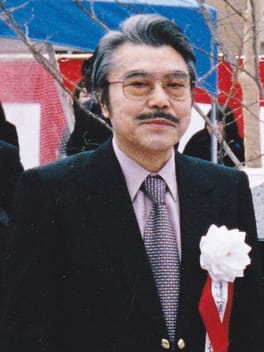
Photo: Adataro / CC BY-SA 4.0 (source: Wikimedia Commons)
My Take
Minoru Endo is the kind of figure who probably shaped what Japanese popular music sounds like to your grandparents, your parents, and even to you — even if his name never once crossed your lips. Born in 1932 in Tokyo, he spent decades writing enka and kayokyoku that weren't just songs but emotional wallpaper for postwar Japan: the longing, the nostalgia, the sense of rain on a train window late at night. The sheer volume is staggering, and the fact that he kept going until the very end says something about a person for whom songwriting wasn't a job but a compulsion. Japan gave him the People's Honor Award after he passed in December 2008, which landed as both a tribute and an admission that the country had maybe not said thank you loudly enough while he was still around. A craftsman in the truest sense, no theatrics required.
This take was written by generative AI, one per person, from publicly reported facts (editorial policy). It is a reading of the record, not reporting.
Overview
Minoru Endo (July 6, 1932 – December 6, 2008) was a Japanese composer and lyricist born in Tokyo. Over his career he produced an enormous body of popular music and was recognized among the most influential songwriters in postwar Japan. In 1990 he received the Medal with Purple Ribbon, and in 2003 he was designated a Person of Cultural Merit. The People's Honor Award was conferred on him posthumously in 2009.
1. Profile
- Name (English)
- Minoru Endo
- Name (Japanese)
- 遠藤実
- Reading
- えんどう みのる
- Born
- July 6, 1932 – December 6, 2008
- Origin
- Tokyo, Japan
- Occupation
- Composer / Lyricist
- Zodiac / Chinese zodiac
- Cancer / Monkey
2. Background
Awards & achievements
- 1990 — Medal with Purple Ribbon
- 2002 — Order of the Rising Sun, Third Class
- 2003 — Person of Cultural Merit
- 2009 — Order of the Rising Sun, Gold and Silver Star
- 2009 — People's Honor Award
3. Works & records
Works summary
- Works
- 233
- By year (titles with a known year)
- 1952: 1, 1959: 1, 1960: 2, 1961: 1, 1962: 1, 1963: 3, 1964: 1, 1966: 1, 1967: 1, 1972: 1, 1973: 2, 1974: 1, 1975: 2, 1976: 1, 1977: 3, 1979: 6, 1980: 5, 1981: 2, 1984: 2, 1985: 3, 1986: 1, 1987: 2, 1988: 1, 1989: 3, 1990: 1, 1991: 1, 1996: 1, 1999: 1, 2000: 1, 2003: 2, 2004: 2, 2007: 1, 2026: 1, year unknown: 175
- Main labels/studios
- EP (6), CD (4)
Filmography / notable works
| Category | Title | Year |
|---|---|---|
| Notable works | 戻ってほしい | 2026 |
| Notable works | 季節の中で | 2010 |
| Notable works | 大正琴音頭 | 2007 |
| Notable works | 銀婚式 | 2000 |
| Notable works | 歌 | 1999 |
| Notable works | 火の酒 | 1996 |
| Notable works | ふたり舟 | 1991 |
| Notable works | 母 | 1990 |
| Notable works | 今度はいい友だちで | 1989 |
| Notable works | 再会物語 | 1988 |
| Notable works | 昭和川 | 1987 |
| Notable works | 雪椿 | 1987 |
| Notable works | ときめきワルツ | 1986 |
| Notable works | 昭和流れうた | 1985 |
| Notable works | 愛しても今は他人 | 1985 |
| Notable works | 想い川 | 1985 |
| Notable works | 冬支度 | 1984 |
| Notable works | 他人宿 | 1984 |
| Notable works | ふたりの坂道 | 1981 |
| Notable works | 南風 | 1981 |
| Notable works | 他人酒 | 1981 |
| Notable works | 大捜査線 | 1980 |
| Notable works | あなた明日からもう他人 | 1980 |
| Notable works | 哀愁列島 | 1979 |
| Notable works | 北の港町 | 1979 |
| Notable works | 秋田旅愁 | 1979 |
| Notable works | 大東京音頭 | 1979 |
| Notable works | 街のコスモス | 1979 |
| Notable works | 般若心経の響き | 1979 |
| Notable works | 夢追い酒 | 1978 |
| Notable works | 浅草人情 | 1977 |
| Notable works | 北国の春 | 1977 |
| Notable works | ひとり | 1977 |
| Notable works | 江戸の黒豹 | 1977 |
| Notable works | 悲恋草/たそがれたずねびと | 1976 |
| Notable works | すきま風 | 1976 |
| Notable works | みちづれ | 1975 |
| Notable works | ひとりぼっち | 1975 |
| Notable works | 雑草の歌 | 1975 |
| Notable works | 浦和の女 | 1975 |
| Notable works | さすらい | 1975 |
| Notable works | あなたに女ができた時 | 1974 |
| Notable works | おかあさん | 1974 |
| Notable works | 中学三年生 | 1973 |
| Notable works | くちなしの花 | 1973 |
| Notable works | 白樺日記 | 1973 |
| Notable works | 長崎恋ものがたり/雪国の女 | 1972 |
| Notable works | せんせい | 1972 |
| Notable works | 旅鴉 | 1972 |
| Notable works | ついてくるかい | 1971 |
| Notable works | 純子 | 1971 |
| Notable works | 新宿そだち | 1967 |
| Notable works | 風がさらった恋人 | 1967 |
| Notable works | 星影のワルツ | 1966 |
| Notable works | 太陽も笑っている | 1966 |
| Notable works | 妻に捧げる歌 | 1966 |
| Notable works | こまっちゃうナ | 1966 |
| Notable works | 他人船 | 1965 |
| Notable works | 君たちがいて僕がいた | 1964 |
| Notable works | 青春の城下町 | 1964 |
4. Links
- Wikipedia (Japanese)https://ja.wikipedia.org/wiki/%E9%81%A0%E8%97%A4%E5%AE%9F
- Wikidatahttps://www.wikidata.org/wiki/Q7582610
5. About this entry
Tags
- Last updated
Only publicly available facts are listed; non-public or unconfirmed items are omitted. Base data was compiled from Wikidata from June 2026 onward; ages are recalculated daily and deaths are checked against Wikidata on an ongoing basis. Works and profile fields sourced from Wikipedia reflect content as of 2026-08-26. English text is machine-assisted (facts translated by Sonnet, "My Take" written by Opus 4.8). The Japanese page is the source of record.
Frequently asked questions
When was Minoru Endo born?
Minoru Endo was born on July 6, 1932.
When did Minoru Endo die?
Minoru Endo died on December 6, 2008, aged 76.
Where was Minoru Endo from?
Minoru Endo was from Tokyo, Japan.
What did Minoru Endo do?
Minoru Endo worked as Composer, Lyricist.
Composer — see all → · Lyricist — see all → · More people from Japan → · More people born on July 6 →