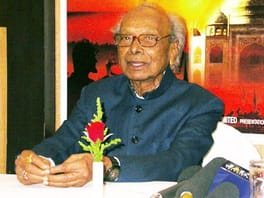
Photo: Bollywood Hungama / CC BY 3.0 (source: Wikimedia Commons)
Naushad was a screenwriter, film score composer and film producer, born on December 25, 1919 in Lucknow, Lucknow district, India. Naushad died on May 5, 2006 at the age of 86. Recorded honors include Sangeet Natak Akademi Award, Filmfare Awards, Dadasaheb Phalke Award and 1 more.
My Take
Naushad is one of those figures whose influence outlives the noise of any single era. To me he is the architect who legitimized classical Indian music inside popular Hindi cinema, making the refined feel accessible to millions. The Dadasaheb Phalke Award and Padma Bhushan only confirm what his melodies already proved. What impresses me most is his range, working as composer, screenwriter, producer and author across the golden age of Indian film. He passed in 2006, yet his compositions still feel alive. I regard him with the deep respect reserved for true craftsmen who shaped a national art form.
This take was written by generative AI, one per person, from publicly reported facts (editorial policy). It is a reading of the record, not reporting.
1. Profile
- Name (English)
- Naushad
- Name (Japanese)
- ナウシャド
- Reading
- なうしゃど
- Born
- December 25, 1919 – May 5, 2006
- Origin
- Lucknow, Lucknow district, India
- Occupation
- screenwriter / composer / film score composer / film producer / writer
- Zodiac / Chinese zodiac
- Capricorn / Goat
2. Background
Awards & achievements
- Sangeet Natak Akademi Award
- Filmfare Awards
- Dadasaheb Phalke Award
- Padma Bhushan
3. Links
- Wikipedia (English)https://en.wikipedia.org/wiki/Naushad
- Wikidatahttps://www.wikidata.org/wiki/Q674337
4. About this entry
Tags
- Last updated
Facts are limited to publicly available information up to 2024; non-public or unconfirmed items are omitted. English text is machine-assisted (facts translated by Sonnet, "My Take" written by Opus 4.8). The Japanese page is the source of record.
Frequently asked questions
When was Naushad born?
Naushad was born on December 25, 1919.
When did Naushad die?
Naushad died on May 5, 2006, aged 86.
Where was Naushad from?
Naushad was from Lucknow, Lucknow district, India.
What did Naushad do?
Naushad worked as screenwriter, composer, film score composer, film producer, writer.
Screenwriter — see all → · Composer — see all → · More people from India → · More people born on December 25 →