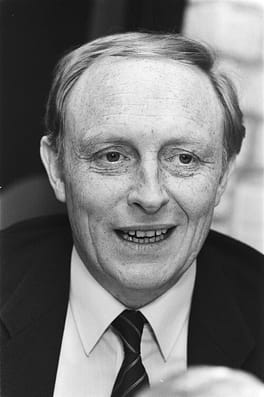
Photo: Rob Bogaerts / Anefo / CC0 (source: Wikimedia Commons)
Public records list Neil Kinnock as a politician. Born on March 28, 1942, Neil Kinnock is from Tredegar, United Kingdom. That works out to 84 years old in 2026. Education on record includes Cardiff University.
My Take
Neil Kinnock interests me precisely because he never won the top prize. Born in the Welsh mining town of Tredegar in 1942, he led the Labour Party from 1983 to 1992 through years in opposition, dragging it back toward electability without ever becoming Prime Minister himself. I have a soft spot for figures who do the unglamorous rebuilding so that others can later harvest the win. His soft-left pragmatism and his later role as a European Commission Vice-President show a man who kept adapting rather than sulking. Losing repeatedly and refusing to give up takes a particular stubborn dignity, and I respect it.
This take was written by generative AI, one per person, from publicly reported facts (editorial policy). It is a reading of the record, not reporting.
1. Profile
- Name (English)
- Neil Kinnock
- Name (Japanese)
- ニール・キノック
- Reading
- にーる・きのっく
- Born
- March 28, 1942 (age 84)
- Origin
- Tredegar, United Kingdom
- Occupation
- politician
- Zodiac / Chinese zodiac
- Aries / Horse
2. Background
- University
- Cardiff University
3. Links
- Wikipedia (English)https://en.wikipedia.org/wiki/Neil%20Kinnock
- Wikipedia (Japanese)https://ja.wikipedia.org/wiki/%E3%83%8B%E3%83%BC%E3%83%AB%E3%83%BB%E3%82%AD%E3%83%8E%E3%83%83%E3%82%AF
- Wikidatahttps://www.wikidata.org/wiki/Q317258
4. About this entry
Tags
- Last updated
Facts are limited to publicly available information up to 2024; non-public or unconfirmed items are omitted. English text is machine-assisted (facts translated by Sonnet, "My Take" written by Opus 4.8). The Japanese page is the source of record.
Frequently asked questions
When was Neil Kinnock born?
Born March 28, 1942 (age 84).
Where is Neil Kinnock from?
Neil Kinnock is from Tredegar, United Kingdom.
What does Neil Kinnock do?
Neil Kinnock works as politician.
Politician — see all → · More people from the United Kingdom →