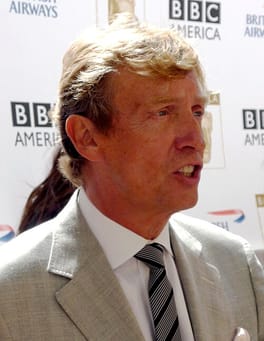
Photo: Greg Hernandez / CC BY 2.0 (source: Wikimedia Commons)
Nigel Lythgoe is listed as a dancer, film director and television director. Nigel Lythgoe was born in Wirral Peninsula, United Kingdom on July 9, 1949. That works out to 77 years old in 2026.
My Take
Nigel Lythgoe is the rare figure who reshaped entertainment from both the floor and the control room. He started as a dancer in the Young Generation, became a choreographer, then built the machinery behind Pop Idol and American Idol that defined a whole television era. Many know him only as the sharp-tongued judge, but I value the dancer's eye behind that persona, someone who genuinely understands the work he critiques. Producers rarely get the credit performers do, yet he engineered cultural moments that shaped pop music for years. The OBE feels appropriate for that kind of behind-the-scenes impact.
This take was written by generative AI, one per person, from publicly reported facts (editorial policy). It is a reading of the record, not reporting.
1. Profile
- Name (English)
- Nigel Lythgoe
- Name (Japanese)
- ナイジェル・リスゴー
- Reading
- ないじぇる・りすごー
- Born
- July 9, 1949 (age 77)
- Origin
- Wirral Peninsula, United Kingdom
- Occupation
- dancer / film director / television director / choreographer / television producer
- Zodiac / Chinese zodiac
- Cancer / Ox
2. Links
3. About this entry
Tags
- Last updated
Facts are limited to publicly available information up to 2024; non-public or unconfirmed items are omitted. English text is machine-assisted (facts translated by Sonnet, "My Take" written by Opus 4.8). The Japanese page is the source of record.
Frequently asked questions
When was Nigel Lythgoe born?
Nigel Lythgoe was born on July 9, 1949 and is 77 years old.
Where is Nigel Lythgoe from?
Nigel Lythgoe is from Wirral Peninsula, United Kingdom.
What does Nigel Lythgoe do?
Nigel Lythgoe works as dancer, film director, television director, choreographer, television producer.
Dancer — see all → · Film director — see all → · More people from the United Kingdom → · More people born on July 9 →