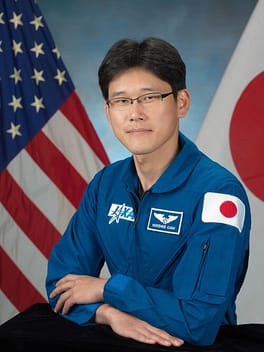
Photo: NASA / Public domain (source: Wikimedia Commons)
My Take
Okay, a doctor who also became an astronaut — I genuinely had to sit with that for a second, because those are two careers most people would consider a full life each. Norishige Kanai trained as a physician, then decided, sure, let's also go live on the International Space Station for six months, because apparently one extraordinary life path wasn't enough. There's something quietly staggering about that combination — the calm, methodical mind of medicine mapped perfectly onto the bone-deep discipline astronaut training demands. He's not the type who makes noise about it, either, which somehow makes it more impressive. I find myself more in awe of the understated ones who just... do the impossible thing, twice over, without making it a whole personality.
This take was written by generative AI, one per person, from publicly reported facts (editorial policy). It is a reading of the record, not reporting.
Overview
Norishige Kanai is a Japanese astronaut and physician born on December 5, 1976, in Tokyo. He is a member of the Japan Aerospace Exploration Agency (JAXA) astronaut corps and is notable for combining a medical career with space exploration. Kanai is active on social media, maintaining a presence on X (formerly Twitter) under the handle @Astro_Kanai.
1. Profile
- Name (English)
- Norishige Kanai
- Name (Japanese)
- 金井宣茂
- Reading
- かない のりしげ
- Born
- December 5, 1976 (age 49)
- Origin
- Tokyo, Japan
- Occupation
- Astronaut / Physician
- Zodiac / Chinese zodiac
- Sagittarius / Dragon
2. Links
3. About this entry
Tags
- Last updated
Only publicly available facts are listed; non-public or unconfirmed items are omitted. Base data was compiled from Wikidata from June 2026 onward; ages are recalculated daily and deaths are checked against Wikidata on an ongoing basis. English text is machine-assisted (facts translated by Sonnet, "My Take" written by Opus 4.8). The Japanese page is the source of record.
Frequently asked questions
When was Norishige Kanai born?
Norishige Kanai was born on December 5, 1976 and is 49 years old.
Where is Norishige Kanai from?
Norishige Kanai is from Tokyo, Japan.
What does Norishige Kanai do?
Norishige Kanai works as Astronaut, Physician.
Astronaut — see all → · Physician — see all → · More people from Japan → · More people born on December 5 →