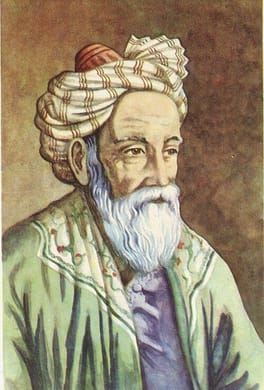
Photo: The original uploader was Atilin at French Wikipedia. / CC BY-SA 3.0 (source: Wikimedia Commons)
Omar Khayyám, born on May 18, 1048 in Nishapur, Razavi Khorasan Province, Iran, was a mathematician, astronomer and poet. Omar Khayyám died on December 4, 1131 at the age of 83. Credited works include Rubáiyát of Omar Khayyám and Solar Hijri calendar.
My Take
Omar Khayyám is the rare figure who refuses to fit in a single box, and that is precisely why I admire him. A Persian polymath of the eleventh century, he ran cold equations across the sky as a mathematician and astronomer, then turned around and wrote the Rubáiyát, verses on mortality and wine still read a thousand years later. He even shaped the Solar Hijri calendar. What moves me is the coexistence of rigorous logic and aching lyricism in one mind. Born in Nishapur, he reminds me that science and poetry were never enemies. To me he remains a model of the fully alive intellect.
This take was written by generative AI, one per person, from publicly reported facts (editorial policy). It is a reading of the record, not reporting.
1. Profile
- Name (English)
- Omar Khayyám
- Name (Japanese)
- ウマル・ハイヤーム
- Reading
- うまる・はいやーむ
- Born
- May 18, 1048 – December 4, 1131
- Origin
- Nishapur, Razavi Khorasan Province, Iran
- Occupation
- mathematician / astronomer / poet / lyricist / philosopher
- Zodiac / Chinese zodiac
- Taurus / Rat
2. Works & records
Filmography / notable works
| Category | Title |
|---|---|
| Notable work | Rubáiyát of Omar Khayyám |
| Notable work | Solar Hijri calendar |
3. Links
4. About this entry
Tags
- Last updated
Facts are limited to publicly available information up to 2024; non-public or unconfirmed items are omitted. English text is machine-assisted (facts translated by Sonnet, "My Take" written by Opus 4.8). The Japanese page is the source of record.
Frequently asked questions
When was Omar Khayyám born?
Omar Khayyám was born on May 18, 1048.
When did Omar Khayyám die?
Omar Khayyám died on December 4, 1131, aged 83.
Where was Omar Khayyám from?
Omar Khayyám was from Nishapur, Razavi Khorasan Province, Iran.
What did Omar Khayyám do?
Omar Khayyám worked as mathematician, astronomer, poet, lyricist, philosopher.
What was Omar Khayyám known for?
Omar Khayyám's notable works include Rubáiyát of Omar Khayyám, Solar Hijri calendar.
Mathematician — see all → · Astronomer — see all → · More people from Iran → · More people born on May 18 →