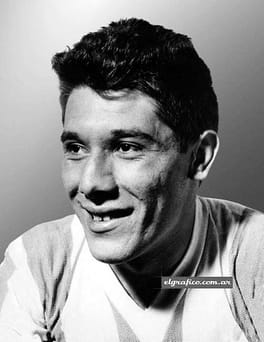
Photo: Unknown author / Public domain (source: Wikimedia Commons)
Born on October 2, 1935 in San Nicolás de los Arroyos, San Nicolás Partido, Argentina, Omar Sívori was an association football player and association football coach. Omar Sívori died on February 17, 2005, aged 69. Listed accolades include Ballon d'Or (1961). The listed height was 163 cm.
My Take
Omar Sívori is a name I associate with a golden, almost mythical era of football. An Argentine-Italian forward who shone at Juventus through the late 1950s and early 1960s, he won three Serie A titles and capped it with the 1961 Ballon d'Or, which still impresses me as proof he was the best in the game that year. He'd already made his name at River Plate before crossing to Italy, and later turned to coaching. At only 163cm, he clearly relied on craft and cunning rather than size. He passed away in 2005, but that flair-first reputation has outlasted him.
This take was written by generative AI, one per person, from publicly reported facts (editorial policy). It is a reading of the record, not reporting.
1. Profile
- Name (English)
- Omar Sívori
- Name (Japanese)
- オマール・シボリ
- Reading
- おまーる・しぼり
- Born
- October 2, 1935 – February 17, 2005
- Origin
- San Nicolás de los Arroyos, San Nicolás Partido, Argentina
- Height
- 163 cm
- Occupation
- association football player / association football coach
- Zodiac / Chinese zodiac
- Libra / Boar
2. Background
Awards & achievements
- 1961 Ballon d'Or
3. Links
- Wikipedia (English)https://en.wikipedia.org/wiki/Omar%20S%C3%ADvori
- Wikipedia (Japanese)https://ja.wikipedia.org/wiki/%E3%82%AA%E3%83%9E%E3%83%BC%E3%83%AB%E3%83%BB%E3%82%B7%E3%83%9C%E3%83%AA
- Wikidatahttps://www.wikidata.org/wiki/Q220700
4. About this entry
Tags
- Last updated
Facts are limited to publicly available information up to 2024; non-public or unconfirmed items are omitted. English text is machine-assisted (facts translated by Sonnet, "My Take" written by Opus 4.8). The Japanese page is the source of record.
Frequently asked questions
When was Omar Sívori born?
Born October 2, 1935.
When did Omar Sívori die?
Died February 17, 2005, aged 69.
Where was Omar Sívori from?
Omar Sívori was from San Nicolás de los Arroyos, San Nicolás Partido, Argentina.
What did Omar Sívori do?
Omar Sívori worked as association football player, association football coach.
How tall was Omar Sívori?
Omar Sívori was 163 cm.
Association football player — see all → · Association football coach — see all → · More people from Argentina →