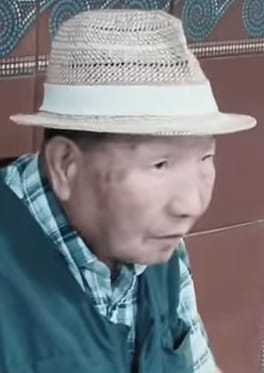
Photo: Noah Matsuki Halbur / 松木之明 / CC BY 3.0 (source: Wikimedia Commons)
My Take
I'll be honest, I can't read this man's name without my chest tightening a little. Iwao Hakamata started out as a pro boxer from Shizuoka, a guy who once settled things with his fists inside the ropes, and then his whole life got hijacked by a conviction he never deserved. Try to actually sit with it: decades on death row, waking up every single morning wondering if today's the day they come for you. That's a weight I genuinely can't fathom, and somehow he carried it. What gets me most is his sister refusing to let go, fighting for him year after year until he finally got to breathe free air again. He's not a flashy celebrity to me, born back in 1936 and still here. He's a quiet, heavy reminder of what human dignity and stubborn love really cost.
This take was written by generative AI, one per person, from publicly reported facts (editorial policy). It is a reading of the record, not reporting.
Overview
Iwao Hakamata is a Japanese former professional boxer born on March 10, 1936, in Yuto-cho, Shizuoka Prefecture. He became widely known not for his ring career but as a death-row inmate in what many consider one of Japan's most prominent wrongful-conviction cases. After spending decades incarcerated, he was eventually released pending retrial. His case drew sustained attention to issues of criminal justice and the death penalty in Japan.
1. Profile
- Name (English)
- Iwao Hakamata
- Name (Japanese)
- 袴田巌
- Reading
- はかまた いわお
- Born
- March 10, 1936 (age 90)
- Origin
- Yuto-cho, Shizuoka Prefecture, Japan
- Occupation
- Boxer
- Zodiac / Chinese zodiac
- Pisces / Rat
2. Links
- Wikipedia (Japanese)https://ja.wikipedia.org/wiki/%E8%A2%B4%E7%94%B0%E5%B7%8C
- Wikidatahttps://www.wikidata.org/wiki/Q1090848
3. About this entry
Tags
- Last updated
Facts are limited to publicly available information up to 2024; non-public or unconfirmed items are omitted. English text is machine-assisted (facts translated by Sonnet, "My Take" written by Opus 4.8). The Japanese page is the source of record.
Frequently asked questions
When was Iwao Hakamata born?
Born March 10, 1936 (age 90).
Where is Iwao Hakamata from?
Iwao Hakamata is from Yuto-cho, Shizuoka Prefecture, Japan.
What does Iwao Hakamata do?
Iwao Hakamata works as Boxer.