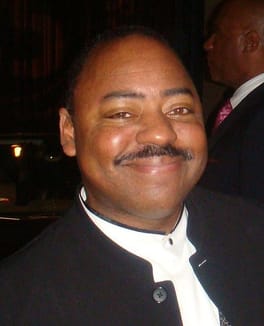
Photo: eternalconceptspr / CC BY 2.0 (source: Wikimedia Commons)
My Take
Paul Jackson, Jr. is one of those names you've heard a thousand times without realizing it, because his guitar is buried in the credits of so many records you love. As a first-call session player in Los Angeles he played on everything from Michael Jackson sessions to countless R&B and pop hits, the kind of versatile professional who makes everyone else sound better. His own smooth jazz albums show a warm, clean tone and tasteful phrasing that never overplays. I always appreciate musicians who can shine in the studio without needing the spotlight, and Jackson is a textbook example of that craft.
This take was written by generative AI, one per person, from publicly reported facts (editorial policy). It is a reading of the record, not reporting.
Overview
Paul Jackson, Jr. (born December 30, 1959, in Los Angeles, California) is an American jazz and session guitarist, composer, and music producer. A graduate of the University of Southern California, he became one of the most in-demand studio musicians in Los Angeles, performing on countless pop, R&B, and jazz recordings. He has also released his own solo albums as a smooth jazz artist.
1. Profile
- Name (English)
- Paul Jackson, Jr.
- Name (Japanese)
- ポール・ジャクソン・ジュニア
- Reading
- ぽーる・じゃくそん・じゅにあ
- Born
- December 30, 1959 (age 66)
- Origin
- Los Angeles, California, United States
- Occupation
- Jazz musician / Guitarist / Jazz guitarist / Composer / Music producer
- Zodiac / Chinese zodiac
- Capricorn / Pig
2. Background
- University
- University of Southern California
3. Links
- Official sitehttp://www.pauljacksonjr.com
- Xhttps://x.com/pauljacksonjr
- Wikipedia (English)https://en.wikipedia.org/wiki/Paul%20Jackson%20Jr.
- Wikipedia (Japanese)https://ja.wikipedia.org/wiki/%E3%83%9D%E3%83%BC%E3%83%AB%E3%83%BB%E3%82%B8%E3%83%A3%E3%82%AF%E3%82%BD%E3%83%B3%E3%83%BB%E3%82%B8%E3%83%A5%E3%83%8B%E3%82%A2
- Wikidatahttps://www.wikidata.org/wiki/Q600816
4. About this entry
Tags
- Last updated
Facts are limited to publicly available information up to 2024; non-public or unconfirmed items are omitted. English text is machine-assisted (facts translated by Sonnet, "My Take" written by Opus 4.8). The Japanese page is the source of record.
Frequently asked questions
When was Paul Jackson, Jr. born?
Born December 30, 1959 (age 66).
Where is Paul Jackson, Jr. from?
Paul Jackson, Jr. is from Los Angeles, California, United States.
What does Paul Jackson, Jr. do?
Paul Jackson, Jr. works as Jazz musician, Guitarist, Jazz guitarist, Composer, Music producer.
Jazz musician — see all → · Guitarist — see all → · More people from the United States →