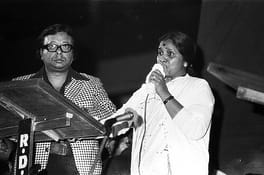
Photo: Aditijain / Public domain (source: Wikimedia Commons)
Rahul Dev Burman, born on June 27, 1939 in Kolkata, India, was a film score composer, recording artist and director. Rahul Dev Burman died on January 4, 1994 at the age of 54. Schooling on record includes Ballygunge Government High School. Recorded honors include Filmfare Award for Best Music Director (1983, 1984, 1995).
My Take
Rahul Dev Burman sits near the summit of Indian film music for me, and the numbers only hint at why. Scoring 331 films from the 1960s into the 1990s would be staggering on volume alone, but it was his restless playfulness that changed the game: turning bottles, breath, and odd noises into instruments long before that felt acceptable. The three Filmfare Best Music Director wins barely register against his real legacy, which is how thoroughly later Bollywood composers still revere him. His death at 55 in 1994 felt premature for someone so inventive. I keep coming back to his melodies because they still sound braver than most of what followed.
This take was written by generative AI, one per person, from publicly reported facts (editorial policy). It is a reading of the record, not reporting.
1. Profile
- Name (English)
- Rahul Dev Burman
- Name (Japanese)
- R・D・バーマン
- Reading
- R・D・ばーまん
- Born
- June 27, 1939 – January 4, 1994
- Origin
- Kolkata, India
- Occupation
- composer / film score composer / recording artist / director / actor
- Zodiac / Chinese zodiac
- Cancer / Rabbit
2. Background
- High school
- Ballygunge Government High School
Awards & achievements
- 1995 Filmfare Award for Best Music Director
- 1984 Filmfare Award for Best Music Director
- 1983 Filmfare Award for Best Music Director
3. Links
- Wikipedia (English)https://en.wikipedia.org/wiki/R.%20D.%20Burman
- Wikidatahttps://www.wikidata.org/wiki/Q3351160
4. About this entry
Tags
- Last updated
Facts are limited to publicly available information up to 2024; non-public or unconfirmed items are omitted. English text is machine-assisted (facts translated by Sonnet, "My Take" written by Opus 4.8). The Japanese page is the source of record.
Frequently asked questions
When was Rahul Dev Burman born?
Born June 27, 1939.
When did Rahul Dev Burman die?
Died January 4, 1994, aged 54.
Where was Rahul Dev Burman from?
Rahul Dev Burman was from Kolkata, India.
What did Rahul Dev Burman do?
Rahul Dev Burman worked as composer, film score composer, recording artist, director, actor.
Composer — see all → · Film score composer — see all → · More people from India →