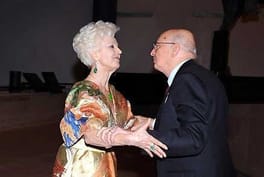
Photo: Unknown author / Attribution (source: Wikimedia Commons)
Raina Kabaivanska is an opera singer, born on December 15, 1934 in Burgas, Bulgaria. That puts Raina Kabaivanska at 91 years old in 2026. Listed accolades include Order of Stara Planina and Grand Officer of the Order of Merit of the Italian Republic.
My Take
Raina Kabaivanska commands my full admiration. A Bulgarian soprano from the port city of Burgas, she stood at the very summit of her generation as a lirico-spinto voice, indelibly tied to Verdi and Puccini yet ranging across Italian, French, Russian and twentieth-century repertory. That breadth demands both vocal power and real intelligence. Decorated with Bulgaria's Order of Stara Planina and Italy's Order of Merit, she later turned to teaching, passing the craft forward. To me, that is the full measure of a true diva: mastering an art, then ensuring it survives. I find her career genuinely inspiring and quietly monumental.
This take was written by generative AI, one per person, from publicly reported facts (editorial policy). It is a reading of the record, not reporting.
1. Profile
- Name (English)
- Raina Kabaivanska
- Name (Japanese)
- ライナ・カバイヴァンスカ
- Reading
- らいな・かばいゔぁんすか
- Born
- December 15, 1934 (age 91)
- Origin
- Burgas, Bulgaria
- Occupation
- opera singer
- Zodiac / Chinese zodiac
- Sagittarius / Dog
2. Background
Awards & achievements
- Order of Stara Planina
- Grand Officer of the Order of Merit of the Italian Republic
3. Links
- Official sitehttps://www.rainakabaivanska.net/
- Wikipedia (English)https://en.wikipedia.org/wiki/Raina%20Kabaivanska
- Wikipedia (Japanese)https://ja.wikipedia.org/wiki/%E3%83%A9%E3%82%A4%E3%83%8A%E3%83%BB%E3%82%AB%E3%83%90%E3%82%A4%E3%83%B4%E3%82%A1%E3%83%B3%E3%82%B9%E3%82%AB
- Wikidatahttps://www.wikidata.org/wiki/Q265139
4. About this entry
Tags
- Last updated
Facts are limited to publicly available information up to 2024; non-public or unconfirmed items are omitted. English text is machine-assisted (facts translated by Sonnet, "My Take" written by Opus 4.8). The Japanese page is the source of record.
Frequently asked questions
When was Raina Kabaivanska born?
Born December 15, 1934 (age 91).
Where is Raina Kabaivanska from?
Raina Kabaivanska is from Burgas, Bulgaria.
What does Raina Kabaivanska do?
Raina Kabaivanska works as opera singer.