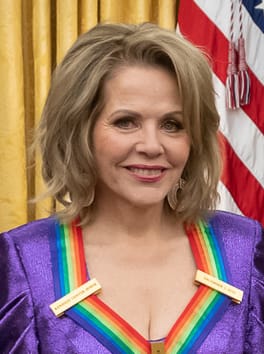
Photo: The White House / Public domain (source: Wikimedia Commons)
Renée Fleming was born in Indiana, Pennsylvania, United States on February 14, 1959. Renée Fleming is credited as an opera singer and musician. That works out to 67 years old in 2026. Recorded honors include National Medal of Arts (2012), Legion of Honour, Fulbright Scholarship and 4 more.
My Take
To me, Renée Fleming is the rare classical artist who refused to stay inside the opera house. Rising from a small Pennsylvania town to the world's great stages, she has won five Grammys and earned both the National Medal of Arts and a Kennedy Center Honor, yet what impresses me most is her curiosity. She sings at state occasions, in film, and in research crossovers on music and the brain, treating her gift as something to share rather than guard. That generosity, paired with a luminous soprano, is exactly why I think she belongs among the genuine ambassadors of her art.
This take was written by generative AI, one per person, from publicly reported facts (editorial policy). It is a reading of the record, not reporting.
1. Profile
- Name (English)
- Renée Fleming
- Name (Japanese)
- ルネ・フレミング
- Reading
- るね・ふれみんぐ
- Born
- February 14, 1959 (age 67)
- Origin
- Indiana, Pennsylvania, United States
- Occupation
- opera singer / musician
- Zodiac / Chinese zodiac
- Aquarius / Boar
2. Background
Awards & achievements
- 2012 National Medal of Arts
- Legion of Honour
- Fulbright Scholarship
- 2015 honorary doctor of Harvard University
- 2012 Echo Klassik – Female Singer of the Year
- Richard Tucker Award
- Classic Brit Awards
3. Links
- Official sitehttps://www.reneefleming.com/
- Instagramhttps://www.instagram.com/reneeflemingmusic/
- Xhttps://x.com/reneesmusings
- Wikipedia (English)https://en.wikipedia.org/wiki/Ren%C3%A9e%20Fleming
- Wikipedia (Japanese)https://ja.wikipedia.org/wiki/%E3%83%AB%E3%83%8D%E3%83%BB%E3%83%95%E3%83%AC%E3%83%9F%E3%83%B3%E3%82%B0
- Wikidatahttps://www.wikidata.org/wiki/Q165637
4. About this entry
Tags
- Last updated
Facts are limited to publicly available information up to 2024; non-public or unconfirmed items are omitted. English text is machine-assisted (facts translated by Sonnet, "My Take" written by Opus 4.8). The Japanese page is the source of record.
Frequently asked questions
When was Renée Fleming born?
Renée Fleming was born on February 14, 1959 and is 67 years old.
Where is Renée Fleming from?
Renée Fleming is from Indiana, Pennsylvania, United States.
What does Renée Fleming do?
Renée Fleming works as opera singer, musician.
Opera singer — see all → · Musician — see all → · More people from the United States → · More people born on February 14 →