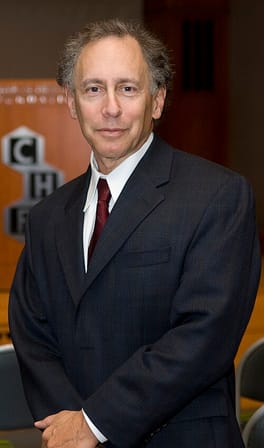
Photo: Douglas A. Lockard / CC BY-SA 3.0 (source: Wikimedia Commons)
Robert S. Langer, Jr. was born on August 29, 1948 in Albany, New York, United States and is credited as an inventor, university teacher and chemical engineer. Robert S. Langer, Jr. is 78 years old as of 2026. Education on record includes Cornell University College of Engineering. Listed accolades include Breakthrough Prize in Life Sciences (2014), Princess of Asturias Award for Technical and Scientific Research (2008), John Fritz Medal (2003) and 5 more.
My Take
Robert Langer is the rare scientist whose work probably touches your life without you knowing his name. As an MIT Institute Professor, one of only a handful, he's operating at the absolute peak of academic engineering. What impresses me most is the breadth of recognition: the Breakthrough Prize in Life Sciences, the Queen Elizabeth Prize for Engineering, the Princess of Asturias Award, the Perkin and John Fritz Medals. That's not a niche specialist; that's someone whose drug-delivery and tissue-engineering ideas reshaped biotechnology. The Cornell-to-MIT path tracks, and the sheer award count tells me he turned lab insight into real-world medicine again and again.
This take was written by generative AI, one per person, from publicly reported facts (editorial policy). It is a reading of the record, not reporting.
1. Profile
- Name (English)
- Robert S. Langer, Jr.
- Name (Japanese)
- ロバート・ランガー
- Reading
- ろばーと・らんがー
- Born
- August 29, 1948 (age 78)
- Origin
- Albany, New York, United States
- Occupation
- inventor / university teacher / chemical engineer / biotechnologist / engineer
- Zodiac / Chinese zodiac
- Virgo / Rat
2. Background
- University
- Cornell University College of Engineering
Awards & achievements
- 2014 Breakthrough Prize in Life Sciences
- 2008 Princess of Asturias Award for Technical and Scientific Research
- 2003 John Fritz Medal
- 2015 Queen Elizabeth Prize for Engineering
- 2003 Harvey Prize
- 2012 Perkin Medal
- 2012 Wilhelm Exner Medal
- 2015 Scheele Award
3. Links
4. About this entry
Tags
- Last updated
Facts are limited to publicly available information up to 2024; non-public or unconfirmed items are omitted. English text is machine-assisted (facts translated by Sonnet, "My Take" written by Opus 4.8). The Japanese page is the source of record.
Frequently asked questions
When was Robert S. Langer, Jr. born?
Born August 29, 1948 (age 78).
Where is Robert S. Langer, Jr. from?
Robert S. Langer, Jr. is from Albany, New York, United States.
What does Robert S. Langer, Jr. do?
Robert S. Langer, Jr. works as inventor, university teacher, chemical engineer, biotechnologist, engineer.
Inventor — see all → · University teacher — see all → · More people from the United States →