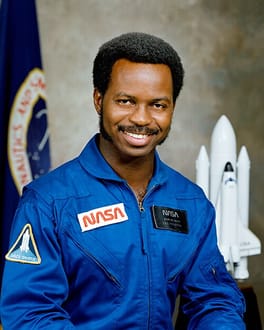
Photo: NASA / Public domain (source: Wikimedia Commons)
Ronald McNair was born on October 21, 1950 in Lake City, South Carolina, United States and was credited as a physicist, astronaut and saxophonist. Ronald McNair died on January 28, 1986, aged 35. Education on record includes North Carolina Agricultural and Technical State University. Awards on record include Congressional Space Medal of Honor (2004) and NASA Distinguished Service Medal (1986).
My Take
Ronald McNair's life humbles me every time I revisit it. A Black kid from rural Lake City, South Carolina, who came of age under segregation, he earned a physics PhD from MIT and became a NASA astronaut, all while playing saxophone and practicing karate. That breadth alone is staggering. His death aboard Challenger in 1986, at just 35, is one of those losses that still stings decades later. But I prefer to remember the trajectory rather than the tragedy: a man who answered prejudice with relentless excellence. The Congressional Space Medal of Honor is fitting, yet his real legacy is the kids he taught to dream.
This take was written by generative AI, one per person, from publicly reported facts (editorial policy). It is a reading of the record, not reporting.
1. Profile
- Name (English)
- Ronald McNair
- Name (Japanese)
- ロナルド・マクネイア
- Reading
- ろなるど・まくねいあ
- Born
- October 21, 1950 – January 28, 1986
- Origin
- Lake City, South Carolina, United States
- Occupation
- physicist / astronaut / saxophonist / karateka
- Zodiac / Chinese zodiac
- Libra / Tiger
2. Background
- University
- North Carolina Agricultural and Technical State University
Awards & achievements
- 2004 Congressional Space Medal of Honor
- 1986 NASA Distinguished Service Medal
3. Links
4. About this entry
Tags
- Last updated
Facts are limited to publicly available information up to 2024; non-public or unconfirmed items are omitted. English text is machine-assisted (facts translated by Sonnet, "My Take" written by Opus 4.8). The Japanese page is the source of record.
Frequently asked questions
When was Ronald McNair born?
Ronald McNair was born on October 21, 1950.
When did Ronald McNair die?
Ronald McNair died on January 28, 1986, aged 35.
Where was Ronald McNair from?
Ronald McNair was from Lake City, South Carolina, United States.
What did Ronald McNair do?
Ronald McNair worked as physicist, astronaut, saxophonist, karateka.
Where did Ronald McNair study?
Ronald McNair attended North Carolina Agricultural and Technical State University.
Physicist — see all → · Astronaut — see all → · More people from the United States → · More people born on October 21 →