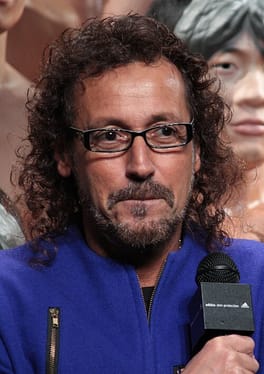
Photo: Norio NAKAYAMA from saitama, japan / CC BY-SA 2.0 (source: Wikimedia Commons)
Ruy Ramos was born in Rio de Janeiro, Brazil on February 9, 1957. Ruy Ramos is an association football player, association football coach and beach soccer player. The age as of 2026 is 69. The listed height is 181 cm.
My Take
Ruy Ramos arrived from Rio and ended up as the creative heart of Japan's national team, which is still one of the more remarkable journeys this sport has produced. He took Japanese citizenship and became a central figure in the game here just as the professional era was being born. What stays with me is Doha in 1993, when Japan conceded in stoppage time and lost its place at the World Cup: the image of Ramos collapsed on the pitch said everything about how completely he had adopted this country as his own. He played with his voice as much as his feet, dragging teammates up to his level of intensity rather than waiting for them to arrive. Coaching, beach soccer, television work afterward — he never learned how to sit still. Japanese football grew up partly because someone that emotional was standing in the middle of it.
This take was written by generative AI, one per person, from publicly reported facts (editorial policy). It is a reading of the record, not reporting.
1. Profile
- Name (English)
- Ruy Ramos
- Name (Japanese)
- ラモス瑠偉
- Reading
- らもす るい
- Born
- February 9, 1957 (age 69)
- Origin
- Rio de Janeiro, Brazil
- Height
- 181 cm
- Occupation
- association football player / association football coach / beach soccer player
- Zodiac / Chinese zodiac
- Aquarius / Rooster
2. Links
- Official sitehttp://www.sunget.co.jp/ramos/index2.html
- Wikipedia (English)https://en.wikipedia.org/wiki/Ruy%20Ramos
- Wikipedia (Japanese)https://ja.wikipedia.org/wiki/%E3%83%A9%E3%83%A2%E3%82%B9%E7%91%A0%E5%81%89
- Wikidatahttps://www.wikidata.org/wiki/Q558836
3. About this entry
Tags
- Last updated
Facts are limited to publicly available information up to 2024; non-public or unconfirmed items are omitted. English text is machine-assisted (facts translated by Sonnet, "My Take" written by Opus 4.8). The Japanese page is the source of record.
Frequently asked questions
When was Ruy Ramos born?
Born February 9, 1957 (age 69).
Where is Ruy Ramos from?
Ruy Ramos is from Rio de Janeiro, Brazil.
What does Ruy Ramos do?
Ruy Ramos works as association football player, association football coach, beach soccer player.
How tall is Ruy Ramos?
Ruy Ramos is 181 cm.
Association football player — see all → · Association football coach — see all → · More people from Brazil →