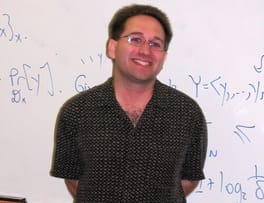
Photo: Easy n / Public domain (source: Wikimedia Commons)
Born on May 21, 1981, Scott Aaronson is from Philadelphia, Pennsylvania, United States. Public records list Scott Aaronson as a computer scientist. The age as of 2026 is 45. Schooling on record includes University of California, Berkeley. Awards on record include Alan T. Waterman Award (2012), Presidential Early Career Award for Scientists and Engineers (2009), ACM Prize in Computing (2020) and 2 more.
My Take
Aaronson is one of those rare scientists whose brilliance I admire as much for its generosity as its depth. Working at the frontier of quantum computing and computational complexity, he has a stack of honors that speaks for itself, from the Waterman Award to ACM Fellow status. But what truly earns my respect is his willingness to open up hard ideas to the public through his writing, refusing to hide behind jargon. He is the kind of mind that quietly props up an entire field while making it feel a little more human. I find that combination genuinely rare and worth celebrating.
This take was written by generative AI, one per person, from publicly reported facts (editorial policy). It is a reading of the record, not reporting.
1. Profile
- Name (English)
- Scott Aaronson
- Name (Japanese)
- スコット・アーロンソン
- Reading
- すこっと・あーろんそん
- Born
- May 21, 1981 (age 45)
- Origin
- Philadelphia, Pennsylvania, United States
- Occupation
- computer scientist
- Zodiac / Chinese zodiac
- Gemini / Rooster
2. Background
- University
- University of California, Berkeley
Awards & achievements
- 2012 Alan T. Waterman Award
- 2009 Presidential Early Career Award for Scientists and Engineers
- 2020 ACM Prize in Computing
- 2019 ACM Fellow
- 2017 Messenger Lectures
3. Links
- Official sitehttps://www.scottaaronson.com/
- Wikipedia (English)https://en.wikipedia.org/wiki/Scott%20Aaronson
- Wikidatahttps://www.wikidata.org/wiki/Q4054157
4. About this entry
Tags
- Last updated
Facts are limited to publicly available information up to 2024; non-public or unconfirmed items are omitted. English text is machine-assisted (facts translated by Sonnet, "My Take" written by Opus 4.8). The Japanese page is the source of record.
Frequently asked questions
When was Scott Aaronson born?
Scott Aaronson was born on May 21, 1981 and is 45 years old.
Where is Scott Aaronson from?
Scott Aaronson is from Philadelphia, Pennsylvania, United States.
What does Scott Aaronson do?
Scott Aaronson works as computer scientist.
Where did Scott Aaronson study?
Scott Aaronson attended University of California, Berkeley.
Computer scientist — see all → · More people from the United States → · More people born on May 21 →