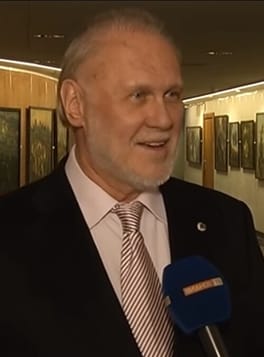
Photo: Видное ТВ / CC BY 3.0 (source: Wikimedia Commons)
Sergei Leiferkus, born on April 4, 1946 in Saint Petersburg, Russia, is an opera singer, performing artist and musician. That puts Sergei Leiferkus at 80 years old in 2026. Listed accolades include USSR State Prize and People's Artist of the RSFSR.
My Take
Sergei Leiferkus is the kind of baritone I gravitate toward: a singer who acts as fiercely as he sings. His signature villains and shadowed figures, Scarpia, Iago, Simon Boccanegra, demand more than a beautiful voice; they need menace and intelligence, and by all accounts he supplies both. The USSR State Prize and People's Artist title confirm a stature few reach. What fascinates me is his command of both Russian and Italian repertoire, two worlds with very different demands. I would have loved to feel that dark, dramatic instrument fill a hall in person; recordings only hint at the presence.
This take was written by generative AI, one per person, from publicly reported facts (editorial policy). It is a reading of the record, not reporting.
1. Profile
- Name (English)
- Sergei Leiferkus
- Name (Japanese)
- セルゲイ・レイフェルクス
- Reading
- せるげい・れいふぇるくす
- Born
- April 4, 1946 (age 80)
- Origin
- Saint Petersburg, Russia
- Occupation
- opera singer / performing artist / singer / musician
- Zodiac / Chinese zodiac
- Aries / Dog
2. Background
Awards & achievements
- USSR State Prize
- People's Artist of the RSFSR
3. Links
4. About this entry
Tags
- Last updated
Facts are limited to publicly available information up to 2024; non-public or unconfirmed items are omitted. English text is machine-assisted (facts translated by Sonnet, "My Take" written by Opus 4.8). The Japanese page is the source of record.
Frequently asked questions
When was Sergei Leiferkus born?
Born April 4, 1946 (age 80).
Where is Sergei Leiferkus from?
Sergei Leiferkus is from Saint Petersburg, Russia.
What does Sergei Leiferkus do?
Sergei Leiferkus works as opera singer, performing artist, singer, musician.
Opera singer — see all → · Performing artist — see all → · More people from Russia →