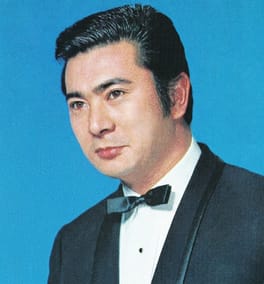
Photo: 平凡出版株式会社 Heibon Shuppan Co., Ltd. / Public domain (source: Wikimedia Commons)
Born on November 29, 1931, Shintarō Katsu was from Tokyo, Japan. Shintarō Katsu was listed as a singer, film director and writer. Death is recorded on June 21, 1997, at the age of 65. Recorded honors include Golden Arrow Award and Mainichi Film Award for Best Actor. Credited works include THE MAN NEVER GIVE UP (1982).
My Take
Shintaro Katsu commands my deep respect as a true force of Japanese cinema. Born in Tokyo, he defined the Zatoichi series and roamed across the Akumyo, Hoodlum Soldier, and Hanzo the Razor films, while also singing, directing, writing, and producing. His acting never felt boxed in by technique; it carried a raw, sensual, dangerous presence that burned straight into the frame, earning him a Mainichi Best Actor award. Though he died in 1997, no one has quite replicated his untamed, deeply human magnetism. He remains, in my view, one of the irreplaceable treasures of postwar Japanese film.
This take was written by generative AI, one per person, from publicly reported facts (editorial policy). It is a reading of the record, not reporting.
1. Profile
- Name (English)
- Shintarō Katsu
- Name (Japanese)
- 勝新太郎
- Reading
- かつ しんたろう
- Born
- November 29, 1931 – June 21, 1997
- Origin
- Tokyo, Japan
- Occupation
- singer / film director / writer / film producer / screenwriter
- Zodiac / Chinese zodiac
- Sagittarius / Goat
- Blood type
- O
- Active years
- 1954 - 1997
2. Background
Awards & achievements
- Golden Arrow Award
- Mainichi Film Award for Best Actor
3. Works & records
Works summary
- Appearances
- 340 (1954–2015)
- By year (titles with a known year)
- 1954: 3, 1955: 14, 1956: 24, 1957: 16, 1958: 14, 1959: 12, 1960: 12, 1961: 13, 1962: 13, 1963: 10, 1964: 13, 1965: 9, 1966: 10, 1967: 12, 1968: 14, 1969: 8, 1970: 14, 1971: 10, 1972: 11, 1973: 11, 1974: 8, 1975: 2, 1976: 3, 1977: 3, 1978: 3, 1979: 2, 1980: 3, 1982: 6, 1983: 4, 1984: 2, 1985: 2, 1987: 3, 1988: 1, 1990: 2, 1994: 3, 1995: 1, 1996: 1, 1997: 1, 1998: 1, 2015: 2, year unknown: 44
- Debut work
- The Great White Tiger Platoon
Filmography / notable works
| Category | Title | Year |
|---|---|---|
| Album | もういちど、遊びばなし | 1998 |
| Album | 歌いまくる勝新太郎 | 1997 |
| Stage | (勝新太郎特別公演)夫婦善哉 東男京女(1996年、大阪・新歌舞伎座) | 1996 |
| Album | 遊びばなし うたとはなしと三味線と | 1995 |
| Stage | 不知火検校 | 1994 |
| Other | 孔雀王アシュラ伝説 | 1990 |
| Other | 浪人街 | 1990 |
| 座頭市 | 1989 | |
| Other | 帝都物語 | 1988 |
| TV drama | 独眼竜政宗 | 1987 |
| TV drama | 鬼とばし | 1987 |
| TV drama | 忠臣蔵・女たち・愛 | 1987 |
| Variety show | 流行事情 #19 ゲスト:勝新太郎 | 1985 |
| Variety show | おもしろ人間ウォンテッド!! | 1985 |
| TV drama | 燃える勇者たち | 1984 |
| Stage | (勝新太郎特別公演)新座頭市物語 糸ぐるま、ビッグショー(1984年3月2日 | 1984 |
| Other | 迷走地図 | 1983 |
| TV drama | 下町物語 | 1983 |
| TV drama | 女たちの大坂城 | 1983 |
| Variety show | この人勝新太郎・中村玉緒ショー | 1983 |
| Variety show | 勝新太郎マイウェイ | 1982 |
| Album | THE MAN NEVER GIVE UP | 1982 |
| TV drama | Keishi-K | 1980 |
| TV drama | 新・座頭市 第3シリーズ | 1979 |
| Stage | (勝新太郎六月特別公演)朦朧車夫、水の流れ、新座頭市物語 糸ぐるま、新座頭市物語 市の耳に子守唄(1979年6月1日 | 1979 |
| TV drama | 新・座頭市 第2シリーズ | 1978 |
| Stage | (十月公演秋の演劇祭)座頭市物語、鶴八鶴次郎、因果小僧六之助(1978年10月1日 | 1978 |
| Variety show | ビッグショー 勝新太郎たまには歌う夜もある | 1978 |
| Variety show | トップスターショー 歌ある限り#23 - 勝新太郎 | 1977 |
| Album | 座頭市子守唄 | 1977 |
| TV drama | 新・座頭市 第1シリーズ | 1976 |
| Stage | (勝新太郎 秋の演劇祭)眠狂四郎無頼控、三味線やくざ、雲の別れ路(1976年10月、東京・明治座) | 1976 |
| 新・座頭市 | 1976 | |
| TV drama | 夫婦旅日記 さらば浪人 | 1976 |
| TV drama | Tsūkai! Kōchiyama Sōshun | 1975 |
| Stage | (秋の演劇祭)播磨とお菊、一本刀土俵入、三味線一代(1975年10月、東京・明治座) | 1975 |
| 悪名 縄張荒らし | 1974 | |
| 御用牙鬼の半蔵やわ肌小判 | 1974 | |
| Other | 無宿 | 1974 |
| TV drama | 座頭市物語 | 1974 |
| 御用牙 鬼の半蔵やわ肌小判 | 1974 | |
| モハメッド・アリ 黒い魂 STAND UP LIKE A MAN | 1974 | |
| Zatoichi's Conspiracy | 1973 | |
| 御用牙かみそり半蔵地獄責め | 1973 | |
| Other | 王将 | 1973 |
| Other | 海軍横須賀刑務所 | 1973 |
| TV drama | 狼・無頼控 第9話 | 1973 |
| TV drama | Oshizamurai Kiichihōgan | 1973 |
| 御用牙 かみそり半蔵地獄責め | 1973 | |
| Zatoichi at Large | 1972 | |
| Zatoichi in Desperation | 1972 | |
| 新兵隊やくざ 火線 | 1972 |
4. Links
- Wikipedia (English)https://en.wikipedia.org/wiki/Shintaro%20Katsu
- Wikipedia (Japanese)https://ja.wikipedia.org/wiki/%E5%8B%9D%E6%96%B0%E5%A4%AA%E9%83%8E
- Wikidatahttps://www.wikidata.org/wiki/Q719551
5. About this entry
Tags
- Last updated
Facts are limited to publicly available information up to 2024; non-public or unconfirmed items are omitted. Works and profile fields sourced from Wikipedia reflect content as of 2026-08-26. English text is machine-assisted (facts translated by Sonnet, "My Take" written by Opus 4.8). The Japanese page is the source of record.
Frequently asked questions
When was Shintarō Katsu born?
Shintarō Katsu was born on November 29, 1931.
When did Shintarō Katsu die?
Shintarō Katsu died on June 21, 1997, aged 65.
Where was Shintarō Katsu from?
Shintarō Katsu was from Tokyo, Japan.
What did Shintarō Katsu do?
Shintarō Katsu worked as singer, film director, writer, film producer, screenwriter.
What was Shintarō Katsu's blood type?
Shintarō Katsu's blood type was O.
When was Shintarō Katsu active?
Shintarō Katsu was active from 1954 to 1997.
What was Shintarō Katsu known for?
Shintarō Katsu's notable works include THE MAN NEVER GIVE UP.
Singer — see all → · Film director — see all → · More people from Japan → · More people born on November 29 →