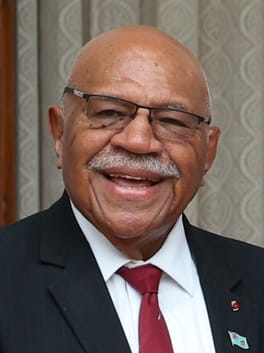
Photo: Prime Minister's Office / GODL-India (source: Wikimedia Commons)
Sitiveni Rabuka was born on September 13, 1948 in Cakaudrove, Fiji and is credited as a politician, rugby union player and major general. Sitiveni Rabuka is 78 years old as of 2026. Schooling on record includes Defence Services Staff College.
My Take
Sitiveni Rabuka is one of the more morally complicated figures I have come across. A rugby player turned soldier turned coup leader turned democratically elected prime minister, he embodies the turbulent arc of modern Fijian politics in a single life. I find it genuinely fascinating that a man who toppled governments by force in 1987 later returned to power through the ballot box, more than once. Whatever one makes of his record, and opinions are sharply split, you cannot tell the story of contemporary Fiji without him. He is proof that history rarely sorts its protagonists into neat heroes and villains.
This take was written by generative AI, one per person, from publicly reported facts (editorial policy). It is a reading of the record, not reporting.
1. Profile
- Name (English)
- Sitiveni Rabuka
- Name (Japanese)
- シティベニ・ランブカ
- Reading
- してぃべに・らんぶか
- Born
- September 13, 1948 (age 78)
- Origin
- Cakaudrove, Fiji
- Occupation
- politician / rugby union player / major general
- Zodiac / Chinese zodiac
- Virgo / Rat
2. Background
- University
- Defence Services Staff College
3. Links
4. About this entry
Tags
- Last updated
Facts are limited to publicly available information up to 2024; non-public or unconfirmed items are omitted. English text is machine-assisted (facts translated by Sonnet, "My Take" written by Opus 4.8). The Japanese page is the source of record.
Frequently asked questions
When was Sitiveni Rabuka born?
Sitiveni Rabuka was born on September 13, 1948 and is 78 years old.
Where is Sitiveni Rabuka from?
Sitiveni Rabuka is from Cakaudrove, Fiji.
What does Sitiveni Rabuka do?
Sitiveni Rabuka works as politician, rugby union player, major general.
Where did Sitiveni Rabuka study?
Sitiveni Rabuka attended Defence Services Staff College.
Politician — see all → · Rugby union player — see all → · More people from Fiji → · More people born on September 13 →