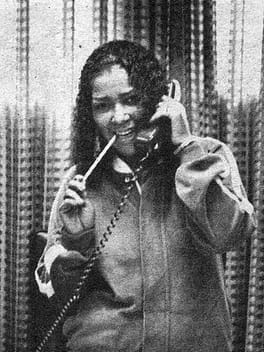
Photo: Val Wilmer / Public domain (source: Wikimedia Commons)
Sylvia Robinson was a record producer, singer and songwriter, born on March 6, 1936 in New York, United States. Sylvia Robinson died on September 29, 2011, aged 75. Education on record includes Washington Irving High School. Listed accolades include Rock and Roll Hall of Fame (2022).
My Take
Sylvia Robinson is, to my mind, one of the great unsung architects of modern music. A Harlem talent who scored her own hit with Pillow Talk, her real power lay in production, where she helped pry open the door for hip-hop to reach the world. Her 2022 induction into the Rock and Roll Hall of Fame felt long overdue rather than surprising. I have always believed the coolest people are those who choose to make others shine, and she read the cultural moment with an instinct few possessed. She died in 2011, but the beats she set in motion still pulse everywhere.
This take was written by generative AI, one per person, from publicly reported facts (editorial policy). It is a reading of the record, not reporting.
1. Profile
- Name (English)
- Sylvia Robinson
- Name (Japanese)
- シルヴィア・ロビンソン
- Reading
- しるゔぃあ・ろびんそん
- Born
- March 6, 1936 – September 29, 2011
- Origin
- New York, United States
- Occupation
- record producer / singer / songwriter / rapper / music executive
- Zodiac / Chinese zodiac
- Pisces / Rat
2. Background
- High school
- Washington Irving High School
Awards & achievements
- 2022 Rock and Roll Hall of Fame
3. Links
4. About this entry
Tags
- Last updated
Facts are limited to publicly available information up to 2024; non-public or unconfirmed items are omitted. English text is machine-assisted (facts translated by Sonnet, "My Take" written by Opus 4.8). The Japanese page is the source of record.
Frequently asked questions
When was Sylvia Robinson born?
Born March 6, 1936.
When did Sylvia Robinson die?
Died September 29, 2011, aged 75.
Where was Sylvia Robinson from?
Sylvia Robinson was from New York, United States.
What did Sylvia Robinson do?
Sylvia Robinson worked as record producer, singer, songwriter, rapper, music executive.
Record producer — see all → · Singer — see all → · More people from the United States →