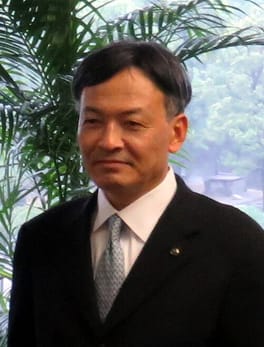
Photo: 国土交通省 / CC BY 4.0 (source: Wikimedia Commons)
My Take
Takashi Namba is the kind of person who never gets trending on social media but quietly keeps the machinery of government running — and honestly, I find that more impressive than any viral moment. Born in Okayama in 1956, Nagoya University grad, career bureaucrat: you can almost picture the life, steady, disciplined, decades of navigating ministries and policy documents while everyone else was chasing flashier callings. Not a headline guy, not a TV face, but the kind of steady presence that means someone, somewhere, got a better outcome because he showed up and did the work. Respect.
This take was written by generative AI, one per person, from publicly reported facts (editorial policy). It is a reading of the record, not reporting.
Overview
Takashi Namba is a Japanese government official born in 1956 in Okayama Prefecture, Japan. He graduated from Nagoya University before entering public service. He is known as a career bureaucrat who has served in governmental roles in Japan.
1. Profile
- Name (English)
- Takashi Namba
- Name (Japanese)
- 難波喬司
- Reading
- なんば たかし
- Born
- 1956
- Origin
- Okayama Prefecture, Japan
- Occupation
- Government Official (Bureaucrat)
- Zodiac / Chinese zodiac
- Monkey
2. Background
- University
- Nagoya University
3. Links
- Wikipedia (Japanese)https://ja.wikipedia.org/wiki/%E9%9B%A3%E6%B3%A2%E5%96%AC%E5%8F%B8
- Wikidatahttps://www.wikidata.org/wiki/Q65292237
4. About this entry
Tags
- Last updated
Facts are limited to publicly available information up to 2024; non-public or unconfirmed items are omitted. English text is machine-assisted (facts translated by Sonnet, "My Take" written by Opus 4.8). The Japanese page is the source of record.
Frequently asked questions
Where is Takashi Namba from?
Takashi Namba is from Okayama Prefecture, Japan.
What does Takashi Namba do?
Takashi Namba works as Government Official (Bureaucrat).