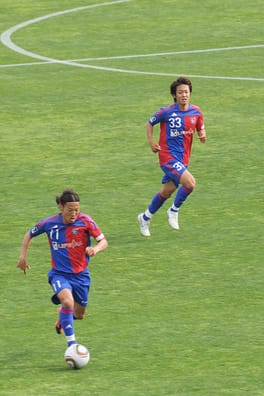
Photo: yoppy from Kawasaki, Kanagawa, Japan / CC BY 2.0 (source: Wikimedia Commons)
My Take
Born on February 29, 1988 — a leap day baby, which means he's technically had fewer official birthdays than most of us have had haircuts. There's something quietly poetic about that for a footballer from Kawasaki. He came up through the Kawasaki Frontale academy, played for Japan's under-16 side at the 2004 AFC U-17 Championship, and later moved into coaching. Some just put in the work on the pitch, season after season, without much fanfare. That quiet professionalism has its own kind of cool.
This take was written by generative AI, one per person, from publicly reported facts (editorial policy). It is a reading of the record, not reporting.
Overview
Tatsuya Suzuki is a Japanese former soccer player and coach born on February 29, 1988 — a leap-year birthday — in Kawasaki, Kanagawa Prefecture. A midfielder from the Kawasaki Frontale academy, he played for Japan at the 2004 AFC U-17 Championship and, as of 2019, was a technical adviser at the TAKA soccer school.
1. Profile
- Name (English)
- Tatsuya Suzuki
- Name (Japanese)
- 鈴木達矢
- Reading
- すずき たつや
- Born
- February 29, 1988 (age 38)
- Origin
- Kawasaki, Kanagawa, Japan
- Height
- 170 cm
- Occupation
- Soccer Player
- Zodiac / Chinese zodiac
- Pisces / Dragon
2. Links
- Wikipedia (Japanese)https://ja.wikipedia.org/wiki/%E9%88%B4%E6%9C%A8%E9%81%94%E7%9F%A2
- Wikidatahttps://www.wikidata.org/wiki/Q3300640
3. About this entry
Tags
- Last updated
Only publicly available facts are listed; non-public or unconfirmed items are omitted. Base data was compiled from Wikidata from June 2026 onward; ages are recalculated daily and deaths are checked against Wikidata on an ongoing basis. English text is machine-assisted (facts translated by Sonnet, "My Take" written by Opus 4.8). The Japanese page is the source of record.
Frequently asked questions
When was Tatsuya Suzuki born?
Tatsuya Suzuki was born on February 29, 1988 and is 38 years old.
Where is Tatsuya Suzuki from?
Tatsuya Suzuki is from Kawasaki, Kanagawa, Japan.
What does Tatsuya Suzuki do?
Tatsuya Suzuki works as Soccer Player.
How tall is Tatsuya Suzuki?
Tatsuya Suzuki is 170 cm tall.
Soccer Player — see all → · More people from Japan → · More people born on February 29 →