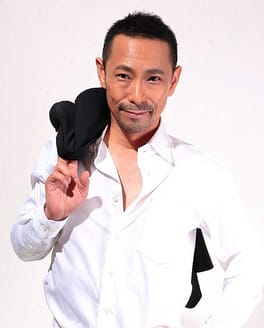
Photo: marifio-taba / Public domain (source: Wikimedia Commons)
My Take
Tenma Shibuya's path genuinely interests me: after years in Japanese film and theatre, he moved to China in 2006 and built a second career there. Capricorns tend to be the ones who quietly do the work while flashier types grab the headlines, and I suspect that's exactly the kind of career he's had — solid, trusted on set, never quite the tabloid darling but the sort of professional a director is quietly relieved to see on the call sheet. Saitama people have that grounded, no-nonsense energy in my experience, and I'd bet that comes through in his performances. His villain turns in Ip Man and Borrow Gun, plus roles in Kano and Air Strike, show how far that move took him.
This take was written by generative AI, one per person, from publicly reported facts (editorial policy). It is a reading of the record, not reporting.
Overview
Tenma Shibuya is a Japanese actor born on January 13, 1969, in Saitama City, Saitama Prefecture. He began acting in 1993 after studying in the United States, moved to China in 2006, and became known in Chinese-speaking Asia for villain roles in the Hong Kong film Ip Man and the Chinese drama Borrow Gun. He is also a Japanese classical dancer and cultural exchange activist.
1. Profile
- Name (English)
- Tenma Shibuya
- Name (Japanese)
- 渋谷天馬
- Reading
- しぶや てんま
- Born
- January 13, 1969 (age 57)
- Origin
- Saitama City, Saitama Prefecture, Japan
- Occupation
- Actor / Television Actor
- Zodiac / Chinese zodiac
- Capricorn / Rooster
2. Links
- Wikipedia (Japanese)https://ja.wikipedia.org/wiki/%E6%B8%8B%E8%B0%B7%E5%A4%A9%E9%A6%AC
- Wikidatahttps://www.wikidata.org/wiki/Q9036550
3. About this entry
Tags
- Last updated
Only publicly available facts are listed; non-public or unconfirmed items are omitted. Base data was compiled from Wikidata from June 2026 onward; ages are recalculated daily and deaths are checked against Wikidata on an ongoing basis. English text is machine-assisted (facts translated by Sonnet, "My Take" written by Opus 4.8). The Japanese page is the source of record.
Frequently asked questions
When was Tenma Shibuya born?
Tenma Shibuya was born on January 13, 1969 and is 57 years old.
Where is Tenma Shibuya from?
Tenma Shibuya is from Saitama City, Saitama Prefecture, Japan.
What does Tenma Shibuya do?
Tenma Shibuya works as Actor, Television Actor.
Actor — see all → · Television Actor — see all → · More people from Japan → · More people born on January 13 →