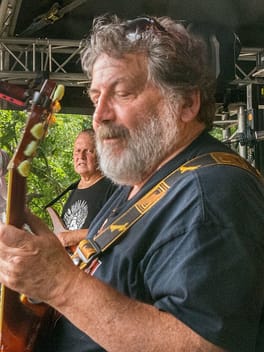
Photo: Roger Green / CC BY-SA 2.0 (source: Wikimedia Commons)
Tim Staffell is credited as a bassist, singer and guitarist. Tim Staffell was born on February 24, 1948 in Ealing, United Kingdom. The age as of 2026 is 78.
My Take
Tim Staffell is one of rock history's great what-ifs, and I find his story genuinely moving rather than tragic. He fronted Smile alongside Brian May and Roger Taylor, then walked away just before Freddie Mercury arrived and the band became Queen. It would be easy to frame him as the man who missed out, but I prefer to read it as someone who knew his own path. He kept making music and built a quiet career in visual art and model-making. To me that second life, choosing craft over fame, says more about him than any near-miss with stardom ever could.
This take was written by generative AI, one per person, from publicly reported facts (editorial policy). It is a reading of the record, not reporting.
1. Profile
- Name (English)
- Tim Staffell
- Name (Japanese)
- ティム・スタッフェル
- Reading
- てぃむ・すたっふぇる
- Born
- February 24, 1948 (age 78)
- Origin
- Ealing, United Kingdom
- Occupation
- bassist / singer / guitarist / songwriter / designer
- Zodiac / Chinese zodiac
- Pisces / Rat
2. Links
- Official sitehttps://www.timstaffell.com/
- Instagramhttps://www.instagram.com/timstaffell/
- Wikipedia (English)https://en.wikipedia.org/wiki/Tim%20Staffell
- Wikipedia (Japanese)https://ja.wikipedia.org/wiki/%E3%83%86%E3%82%A3%E3%83%A0%E3%83%BB%E3%82%B9%E3%82%BF%E3%83%83%E3%83%95%E3%82%A7%E3%83%AB
- Wikidatahttps://www.wikidata.org/wiki/Q470408
3. About this entry
Tags
- Last updated
Facts are limited to publicly available information up to 2024; non-public or unconfirmed items are omitted. English text is machine-assisted (facts translated by Sonnet, "My Take" written by Opus 4.8). The Japanese page is the source of record.
Frequently asked questions
When was Tim Staffell born?
Born February 24, 1948 (age 78).
Where is Tim Staffell from?
Tim Staffell is from Ealing, United Kingdom.
What does Tim Staffell do?
Tim Staffell works as bassist, singer, guitarist, songwriter, designer.
Bassist — see all → · Singer — see all → · More people from the United Kingdom →