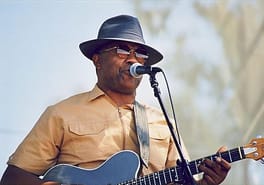
Photo: Masahiro Sumori / CC BY-SA 3.0 (source: Wikimedia Commons)
W. C. Clark was born in Austin, Texas, United States on November 16, 1939. W. C. Clark was a musician and singer-songwriter. Death is recorded on March 2, 2024, at the age of 84.
My Take
Calling someone the "Godfather of Austin Blues" is no small thing, and W. C. Clark earned every syllable of it. From the late 1960s until his passing in 2024, he was the connective tissue of an entire scene, shaping the sound of a city more than chasing personal fame. What moves me most is that figures like Clark measure their legacy not in chart positions but in the careers they nurtured and the soil they prepared for others. He was a musician inseparable from his city, and I find that kind of rooted, generous artistry genuinely beautiful and worth celebrating.
This take was written by generative AI, one per person, from publicly reported facts (editorial policy). It is a reading of the record, not reporting.
1. Profile
- Name (English)
- W. C. Clark
- Name (Japanese)
- W.C.クラーク
- Reading
- W.C.くらーく
- Born
- November 16, 1939 – March 2, 2024
- Origin
- Austin, Texas, United States
- Occupation
- musician / singer-songwriter
- Zodiac / Chinese zodiac
- Scorpio / Rabbit
2. Links
- Official sitehttp://www.wcclark.com/
- Wikipedia (English)https://en.wikipedia.org/wiki/W.%20C.%20Clark
- Wikipedia (Japanese)https://ja.wikipedia.org/wiki/W.C.%E3%82%AF%E3%83%A9%E3%83%BC%E3%82%AF
- Wikidatahttps://www.wikidata.org/wiki/Q2536666
3. About this entry
Tags
- Last updated
Facts are limited to publicly available information up to 2024; non-public or unconfirmed items are omitted. English text is machine-assisted (facts translated by Sonnet, "My Take" written by Opus 4.8). The Japanese page is the source of record.
Frequently asked questions
When was W. C. Clark born?
Born November 16, 1939.
When did W. C. Clark die?
Died March 2, 2024, aged 84.
Where was W. C. Clark from?
W. C. Clark was from Austin, Texas, United States.
What did W. C. Clark do?
W. C. Clark worked as musician, singer-songwriter.
Musician — see all → · Singer-songwriter — see all → · More people from the United States →