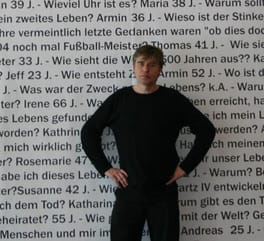
Photo: Benutzer:Meschede / CC BY-SA 3.0 (source: Wikimedia Commons)
Born on April 17, 1957, Wilm Weppelmann was from Lüdinghausen, North Rhine-Westphalia, Germany. Wilm Weppelmann was credited as a photographer. Death is recorded on November 5, 2021, at the age of 64.
My Take
Weppelmann intrigues me precisely because he resists a tidy label. Photographer, conceptual artist, garden artist, writer; the Münster-based German worked across forms while circling one heavy theme, the boundaries of human existence. Solo shows at the Town Museum Münster and the Museum for Sepulchral Culture in Kassel tell me he stared straight at mortality rather than decorating around it. I value artists who treat the unanswerable as a lifelong assignment instead of a marketable gimmick. He died in 2021, but work rooted in life's edges tends to outlast its maker, and I suspect his will.
This take was written by generative AI, one per person, from publicly reported facts (editorial policy). It is a reading of the record, not reporting.
1. Profile
- Name (English)
- Wilm Weppelmann
- Name (Japanese)
- ヴィルム・ヴェッペルマン
- Reading
- ゔぃるむ・ゔぇっぺるまん
- Born
- April 17, 1957 – November 5, 2021
- Origin
- Lüdinghausen, North Rhine-Westphalia, Germany
- Occupation
- photographer
- Zodiac / Chinese zodiac
- Aries / Rooster
2. Links
3. About this entry
Tags
- Last updated
Facts are limited to publicly available information up to 2024; non-public or unconfirmed items are omitted. English text is machine-assisted (facts translated by Sonnet, "My Take" written by Opus 4.8). The Japanese page is the source of record.
Frequently asked questions
When was Wilm Weppelmann born?
Born April 17, 1957.
When did Wilm Weppelmann die?
Died November 5, 2021, aged 64.
Where was Wilm Weppelmann from?
Wilm Weppelmann was from Lüdinghausen, North Rhine-Westphalia, Germany.
What did Wilm Weppelmann do?
Wilm Weppelmann worked as photographer.