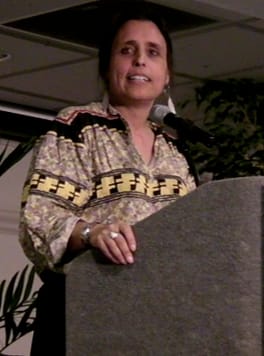
Photo: Eclectek / CC BY 3.0 (source: Wikimedia Commons)
Winona LaDuke is an economist, novelist and politician, born on August 18, 1959 in Los Angeles, California, United States. Winona LaDuke is 67 years old as of 2026. Education on record includes Ashland High School and Harvard University. Awards on record include Reebok Human Rights Award (1988), National Women's Hall of Fame (2007) and Thomas Merton Award (1996).
My Take
Winona LaDuke is the rare figure whose resume reads like several lifetimes stacked together: Harvard-educated economist, novelist, politician, and tireless Native American environmentalist. What moves me most isn't the Reebok Human Rights Award or the Hall of Fame induction, but her decision to run for vice president on the Green Party ticket knowing she would not win. That is conviction over calculation. She used every platform to defend tribal land and sustainable development when it would have been easier to cash in on her credentials. I admire people who keep their principles louder than their ambitions, and she clearly did.
This take was written by generative AI, one per person, from publicly reported facts (editorial policy). It is a reading of the record, not reporting.
1. Profile
- Name (English)
- Winona LaDuke
- Name (Japanese)
- ウィノナ・ラデューク
- Reading
- うぃのな・らでゅーく
- Born
- August 18, 1959 (age 67)
- Origin
- Los Angeles, California, United States
- Occupation
- economist / novelist / politician / writer / environmentalist
- Zodiac / Chinese zodiac
- Leo / Boar
2. Background
- High school
- Ashland High School
- University
- Harvard University
Awards & achievements
- 1988 Reebok Human Rights Award
- 2007 National Women's Hall of Fame
- 1996 Thomas Merton Award
3. Links
4. About this entry
Tags
- Last updated
Facts are limited to publicly available information up to 2024; non-public or unconfirmed items are omitted. English text is machine-assisted (facts translated by Sonnet, "My Take" written by Opus 4.8). The Japanese page is the source of record.
Frequently asked questions
When was Winona LaDuke born?
Born August 18, 1959 (age 67).
Where is Winona LaDuke from?
Winona LaDuke is from Los Angeles, California, United States.
What does Winona LaDuke do?
Winona LaDuke works as economist, novelist, politician, writer, environmentalist.
Economist — see all → · Novelist — see all → · More people from the United States →